51% of B2B software buyers now start their vendor research with AI chatbots — not Google. And 33% of those buyers actually purchased from a company they'd never heard of until the chatbot told them about it. The shortlist gets built before the RFP arrives. If the AI doesn't know you, you don't exist.
What's different about ASO vs. SEO?
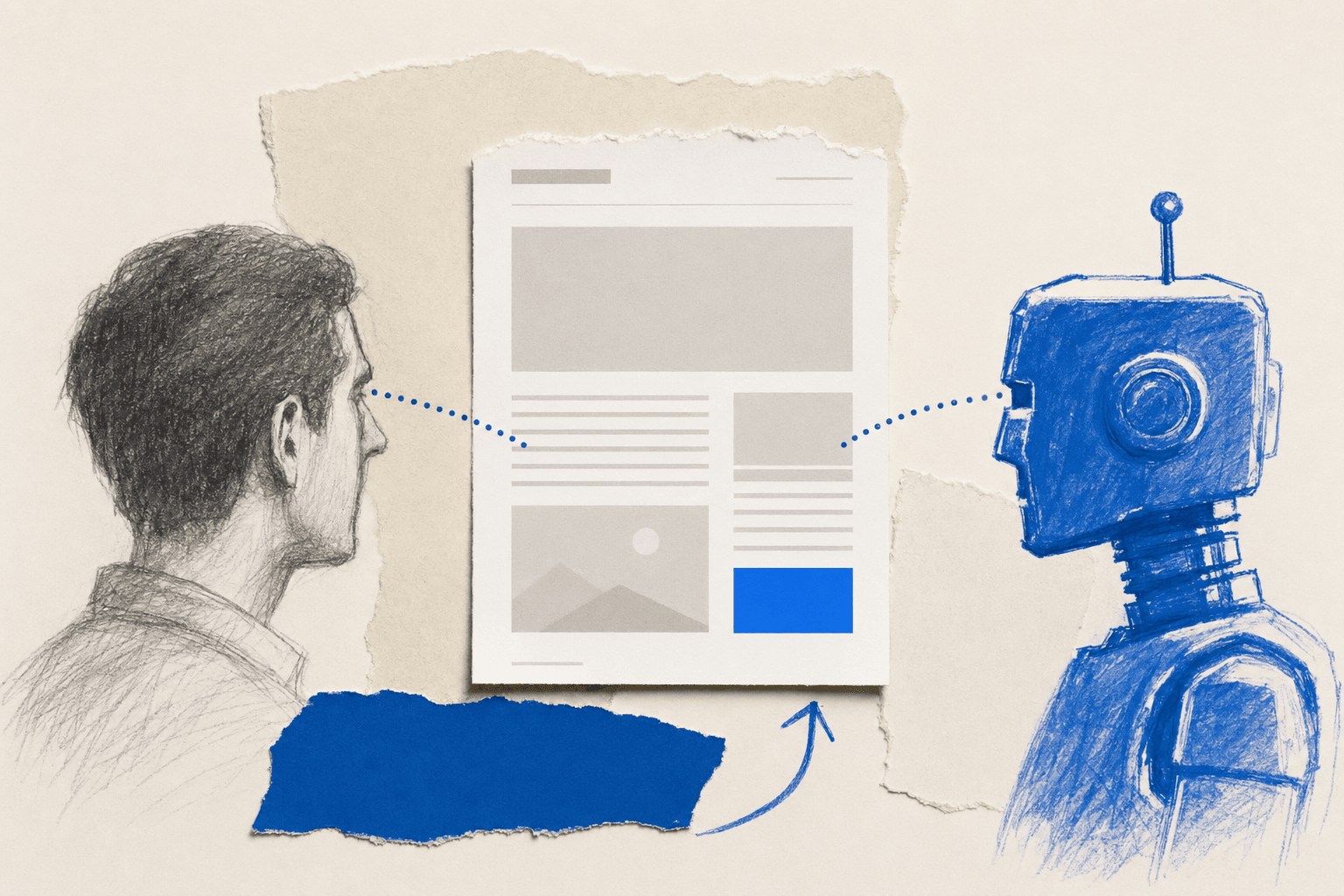
Agent Search Optimization (ASO) is the practice of structuring your digital presence so AI agents can autonomously find, interpret, and act on your content. Where SEO optimized for humans clicking search results, ASO targets AI agents that do the searching, comparing, and shortlisting on the human's behalf.
The urgency is real: AI-driven traffic to U.S. retail sites jumped 269% year-over-year, and visitors referred by AI convert at 4.4x the rate of regular organic traffic. Getting your SEO dialed in won't save you if you're not in the AI's recommendation set.
| Traditional SEO | Agent Search Optimization (ASO) | |
|---|---|---|
| Primary reader | Humans (clicking results) | AI agents (autonomous evaluation) |
| Success metric | CTR, ranking position | AI citation frequency, shortlist inclusion rate |
| Key signals | Keyword density, backlinks, page speed | Schema markup, structured data, API accessibility |
| Final decision | Human clicks, then judges | Agent judges → delivers result to human |
AI agents don't browse the way humans do. They skip visual layout and design entirely, extracting information directly from HTML structure and semantic markup. If your key answer isn't in the first 300–600 characters, the agent moves on to the next site. Pages with schema markup are 36% more likely to appear in AI-generated summaries — for exactly this reason.
Where did the B2B buying journey change?
Traditional B2B buying looked like this: marketing builds awareness → sales makes contact → buyer shows up with an RFP → evaluation → contract. Vendors had multiple touchpoints to make their case.
Now 89% of B2B software buyers use AI in their purchasing process. The AI agent does the vendor research, comparison, and shortlisting — and hands the results to the buyer before they've reached out to anyone. The #1 vendor on that shortlist wins 77% of contracts.
| Traditional B2B buying | AI-era B2B buying | |
|---|---|---|
| Research starts | Google → manual browsing | AI chatbot → agent research |
| Vendor discovery | Ads, outbound DMs, conferences | AI recommendations (even unknown brands) |
| Shortlist timing | After first meetings, internal discussion | Before the RFP arrives, AI completes it |
| Winning factor | Sales skill, brand awareness | AI shortlist entry + top rank |
Winner-takes-most dynamics are solidifying fast. In just two months (Dec 2025–Feb 2026), top-performing brands went from capturing 30.9% to 59.5% of AI citation share. The brands that optimize first are locking in AI recommendation share before competitors catch on.
How to get started: the core framework
ASO rests on three pillars: Discoverability, Evaluability, and Actionability. All three need to be in place before an AI agent can find, understand, and act on your content.
- Discoverability: Make it findable
Add JSON-LD schema markup — Organization, Product, FAQ, and HowTo types are the priority. Google's Schema Markup Generator requires zero coding. Keep your XML sitemap current and clean up your H1→H2→H3 hierarchy so agents can follow the logic. - Evaluability: Make it judgeable
Vague marketing copy is invisible to AI agents. Swap "innovative solution" for "processes 100+ contracts per month" and "98% reduction in response time." Provide pricing, features, and integrations in structured, extractable formats with verified review data. - Actionability: Make it executable
CTAs, contact forms, and pricing need to be machine-parseable. Expose RSS feeds and a content API so agents can pull your latest updates directly. Making key data (pricing, specs, certifications) API-accessible is a long-term investment worth making now. - Content structure: Answer first
AI agents skip design and read text structure only. Put your core answer in the first 300–600 characters of every page. Explicit FAQ sections dramatically improve the accuracy of agent responses about your product. - Monitor: Just ask the AI
Go to ChatGPT, Perplexity, or Claude and ask "recommend 5 [your category] solutions." If competitors appear and you don't, that's your signal. Use Google Rich Results Test and Schema.org Validator to audit your current structured data.
Fastest starting point: FAQ structuring
No need to rebuild the whole site. Pick your 10 most common questions, add JSON-LD FAQ schema, and write each answer in 3 clear sentences. This alone raises the probability of AI agents citing your Q&As directly.
Want to go deeper?
Agent Search Optimization: Future-Proof GTM Copy.ai's official ASO framework — the three-pillar model and GTM workflow integration copy.ai
Agent Search Optimization: Your Website's Third Audience VisualPing's analysis — SEO vs. AEO vs. ASO layering and shortlist algorithm breakdown visualping.io
What is Agentic Search Optimization? A Practical Guide Brand consistency and machine readability as the foundation of effective ASO jarredsmith.com
AAO: Why Assistive Agent Optimization is the Next Evolution of SEO Jason Barnard's SEO→AEO→AIEO→AAO evolution ladder and 2026 citation concentration data searchengineland.com
The Answer Economy: How AI Search Is Rewiring B2B Software Buying G2's survey of 1,076 B2B buyers — raw data on AI chatbots and purchasing behavior shifts demandgenreport.com
Agentic Engine Optimization: Technical Playbook How AI agents read content and the full HTML structure optimization guide almcorp.com

.png)