Loading...

A request to explain a mechanical watch produced a 3D figure you can wind and take apart

Install Anatomy in a coding agent and describe a structure or process to create a figure you can explore and manipulate. We look at figures used in a wiki and a portfolio, along with the creator's watch demo.

3 cases

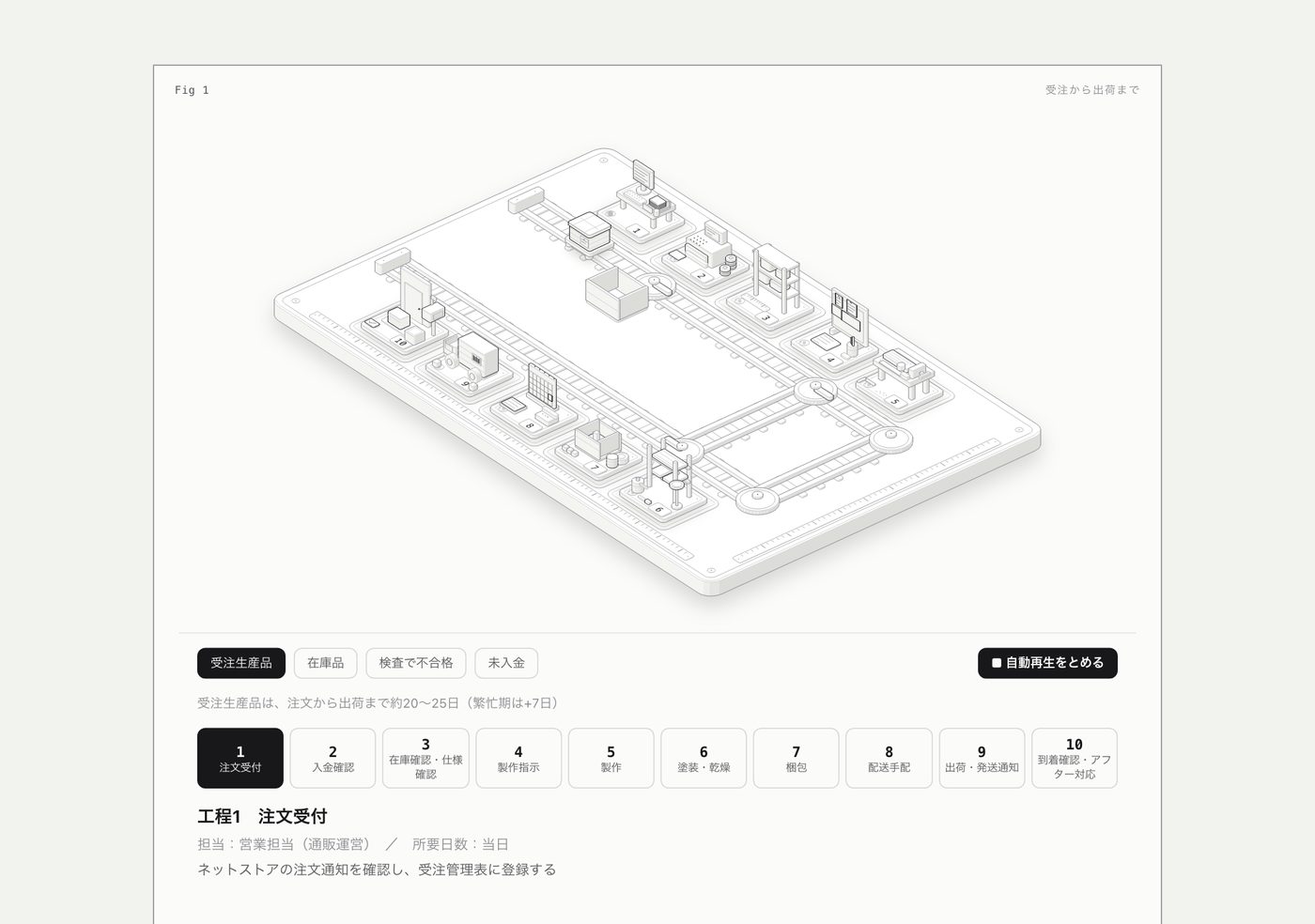
A figure of a fictional furniture company's workflow created in a test by Fyve using Anatomy
Fyve, a company that helps organizations adopt Claude Code, tested Anatomy with materials from a fictional company.[5]

One user who added an Anatomy figure to their portfolio said it looked so good that they redesigned the rest of the site, too. A technology wiki used four figures in its publication to explain topics from cache locking to data decoding.

Anatomy is a skill that gives coding agents workflows and tools for representing structures and how they work in three dimensions. Ask it to explain a subject and it can create a figure for the web, with interactive features if requested.

Reference 01KrackedDevs, operator of a technology wiki

A technology wiki adds four figures covering everything from cache locks to data decoding

Malaysian Tech Wiki presents four figures explaining cache locking, database round trips depending on where rendering happens, the Brain2Qwerty decoding process, and scaling rules. Its operator says the figures in the wiki were made with Anatomy.

The wiki page includes links to each figure and explanations of what it shows.

Reference 02Reddit user TheRedDeathKnight, who shared their portfolio

A portfolio figure inspires a redesign of the rest of the site

TheRedDeathKnight added an Anatomy figure to their portfolio. After seeing the figure, they redesigned the rest of the site themselves. The figure was the part made with Anatomy.

Reference 03Official creator demo · Anatomy creator Ryan

A request to explain a mechanical watch produces a figure you can wind and take apart

Ryan asked for an interactive figure explaining how a mechanical watch keeps time. In the official demo, you can wind the watch's crown and take its mechanism apart. According to the creator, Claude took a little under two hours to make the figure.

Ryan's published prompt

/anatomy explain how a mechanical watch keeps time, interactive

How people reacted

What people liked

  • “The kit on its own: fast, deterministic, and it checks itself”

    This assessment concerns the example rebuild and geometry-checking tools, not a figure made by the small local model.

    Ishank choudhary · technology blogblog.stackademic.com
  • “真的觉得非常酷”

    I really thought it was very cool.

    Their reaction on first seeing the mechanical structure animation.

    数字生命卡兹克 · AI content creatorwoshipm.com

What fell short

  • “画面再精致也还是看不懂”

    No matter how polished the visuals are, I still can't understand them.

    They said that, without knowing the watch's structure, they found it hard to understand the role of each part and added voice narration.

    数字生命卡兹克 · AI content creatorwoshipm.com
  • “nothing in the skill makes up for a weak model”

    This assessment followed three tests using qwen3:1.7b on a CPU, none of which produced a properly completed figure.

    Ishank choudhary · technology blogblog.stackademic.com

How to start

Install Anatomy in a coding agent such as Claude Code or Codex, then paste in the prompt below. Check the principles and numbers in the result yourself.

  1. Starter prompt

    Read https://www.working-ref.com/en/reference/anatomy-wheresryan22-20261027 and suggest three figures I could make with Anatomy based on my interests. Once I choose one, start making it right away. If I have nothing to choose from, start with the first example.

Share this reference

Weekly · Free

Was this reference helpful?

The week in AI: the BEST
just 3, straight to your inbox

Work Smarter with AI

424 readers get it every week

You're in See you in your inbox with the next issue.

A request to explain a mechanical watch produced a 3D figure you can wind and take apart | References