Ever asked an agent to "migrate this entire repo"? About halfway through — context overflow, lost direction, file conflicts. It's the same wall that keeps coming up in agentic coding.
Claude Opus 4.8 hits that wall with 1,000 agents at once. Launched May 28, 2026, Dynamic Workflows has Claude write its own JS orchestration script, while a runtime spins up hundreds of subagents in parallel in the background. Migrating codebases of hundreds of thousands of lines from kickoff to merge — that's real now.
Why agents kept hitting a wall — and how Workflows breaks through
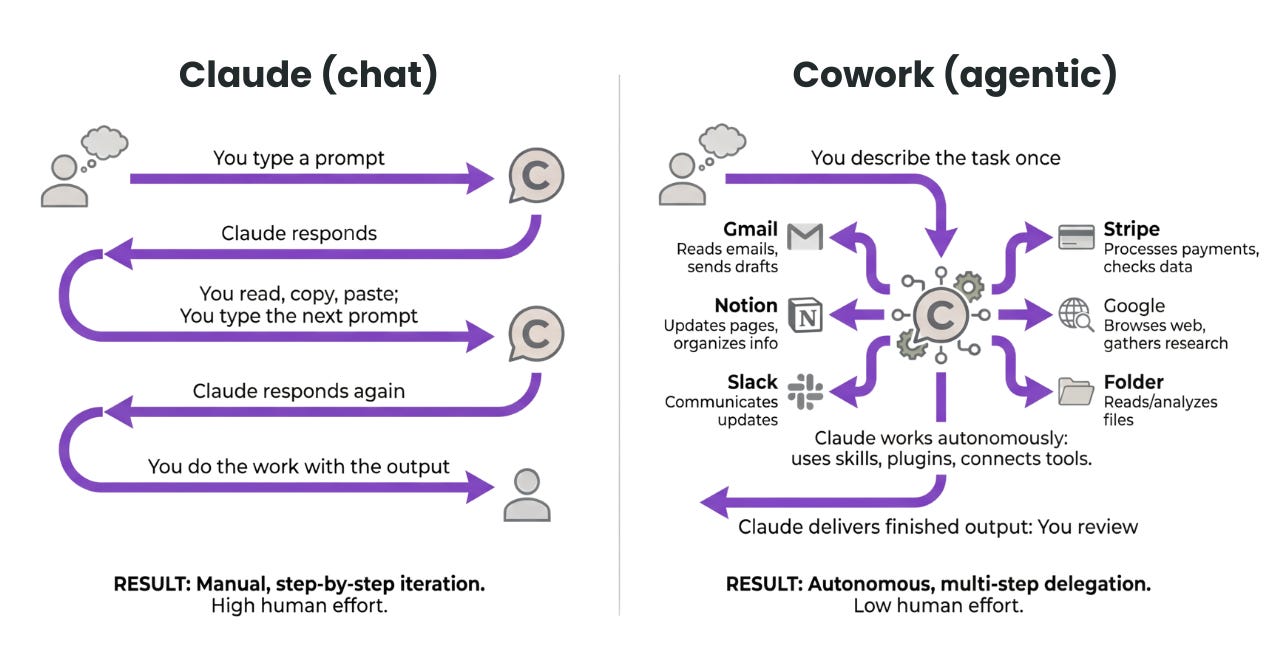
Traditional Claude Code subagents worked like "the main agent dispatching errands." The main holds all the context; subagents just report results back. Throw in hundreds of thousands of lines of code and the main agent hits its limit first.
Dynamic Workflows is a completely different architecture. Claude analyzes the task and writes a JS orchestration script itself, and the runtime executes that script in the background, dynamically spawning agents. Each agent handles a narrow, independent scope — and some are assigned to verify (refute) other agents' findings. The loop continues until answers converge.
| Traditional Subagents | Dynamic Workflows | |
|---|---|---|
| Context management | Main holds everything → overflows easily | Each agent handles a narrow scope independently |
| Scale | Single files to a few thousand lines | Hundreds of thousands of lines |
| Orchestration | Human specifies roles | Claude auto-writes the JS script |
| Concurrent agents | Limited | Up to 16 concurrent, 1,000 total |
| Self-verification | None | Verification agents auto-refute, then converge |
Anthropic's proven case: automatically handling a codebase of hundreds of thousands of lines from kickoff to passing the existing test suite. That's why this architecture shines for broad, repetitive work like codebase migrations.
Plan requirement
Dynamic Workflows is only available on Max, Team, and Enterprise plans. It's enabled by default on Max and Team.
Head-to-head with GPT-5.5 — what the numbers say
Since Opus 4.8 dropped, benchmark comparisons with GPT-5.5 have stacked up. Opus 4.8 leads in 7 of 9 major benchmarks.
The gap is widest on long-context tasks. On GraphWalks BFS 1M (1M-token context reasoning), Opus 4.8 scored 68.1% vs GPT-5.5's 45.4% — a 23-point gap. That's exactly where Opus 4.8's advantage matters most for workloads like Dynamic Workflows.
| Benchmark | GPT-5.5 | Claude Opus 4.8 |
|---|---|---|
| SWE-bench Pro (coding) | 58.6% | 69.2% |
| Humanity's Last Exam (with tools) | 52.2% | 57.9% |
| ARC-AGI-3 (abstract reasoning) | 0.43% | 1.5% |
| OSWorld-Verified (computer use) | 78.7% | 83.4% |
| GraphWalks BFS 1M (long context) | 45.4% | 68.1% |
| Terminal-Bench 2.0 (terminal work) | 78.2% | 74.6% |
GPT-5.5 still holds a 3.6-point edge on terminal-heavy shell work. For coding, reasoning, and computer control, Opus 4.8 wins. If your workflow is mostly terminal automation, GPT-5.5 is worth a look.
Opus 4.8 reaching 1.5% on ARC-AGI-3 isn't just a score bump. ARC Prize analysis found that Opus 4.8 started perceiving environments as objects rather than collections of pixels — a shift Opus 4.7 never made. The abstraction level itself changed.
How to get started right now
- Check your plan
Head to claude.com/pricing and confirm you're on Max, Team, or Enterprise. Personal/Pro plans don't support Dynamic Workflows. Max 5x at $100/month is the entry point. - Update Claude Code to the latest version
Runnpm install -g @anthropic-ai/claude-code. Dynamic Workflows is on by default for Max/Team — no extra setup needed. - Throw the full task at it
Don't break your prompt into pieces. Give it a codebase-scale instruction like "Migrate this entire repo to Python 3.12" and Claude auto-writes the orchestration script. - Use Effort Control
On claude.ai, dial the effort level to match task complexity. Set it to Extra for complex migrations to get deeper analysis. - Monitor costs
API pricing: $5/M input, $25/M output. Fast Mode is $10/$50 but 3× faster — and 3× cheaper than the previous model's Fast Mode. For large migrations, test on a subset first.
Want to go deeper?
Introducing Claude Opus 4.8 The official release notes with full details on Dynamic Workflows, Effort Control, and API changes. anthropic.com
What Is ARC-AGI-3? How Claude Opus 4.8 Achieved State-of-the-Art Fluid Intelligence Analysis of why Opus 4.8 hit the all-time highest ARC-AGI-3 score and what the abstraction-level shift means. mindstudio.ai
Claude Opus 4.8 vs GPT-5.5: Benchmarks, Tests, and Which to Choose The most detailed head-to-head comparison across 9 benchmarks — great for picking the right model by task type. datacamp.com
Anthropic releases Claude Opus 4.8 with new dynamic workflow tool Launch-day coverage with Anthropic interviews and real-world feedback from Bridgewater Associates. techcrunch.com
Claude Opus 4.8 — The New #1 AI Model How Opus 4.8 (61.4) took the Artificial Analysis Intelligence Index from GPT-5.5 (60.2), with a composite benchmark breakdown. artificialanalysis.ai
Anthropic Ships Claude Opus 4.8 Alongside Dynamic Workflows, Capped at 1,000 Subagents Technical architecture, the 1,000-agent limit, and plan-by-plan breakdown. marktechpost.com