Anthropic's Q1 2026 annualized revenue grew 80x against their original plan. SWE-bench Verified scores jumped from 62% to 87% in a single year, and API traffic is up 17x year-over-year. But the most striking data point from the May London conference? Nearly half of the developers in the room admitted they'd shipped PRs written entirely by Claude — without reading a single line of code.
Code w/ Claude 2026 wasn't a product launch event. It was a status report on something already happening at scale.
What was this conference actually about?
Code w/ Claude is Anthropic's annual developer conference. In 2026 it expanded to three cities for the first time: San Francisco (May 6), London (May 19), and Tokyo (June 10). The absence of a model announcement was intentional — Anthropic's message was "the models are already capable enough. The remaining challenge is building the right structures to use them well."
Anthropic engineer Ravi Trivedi said it plainly at the event: "The key principle is getting out of Claude's way. We like to say: 'Let it cook.'" Shipping AI-written PRs without review has quietly become the default at many teams. Here's what that actually means.
Infrastructure got a major upgrade too. Anthropic announced a partnership to allocate all capacity from SpaceX's Colossus supercluster to Claude, and removed peak-hour throttling for Pro/Max subscribers. CEO Dario Amodei told the audience he expects "a one-person billion-dollar company to emerge in 2026".
What actually changed?
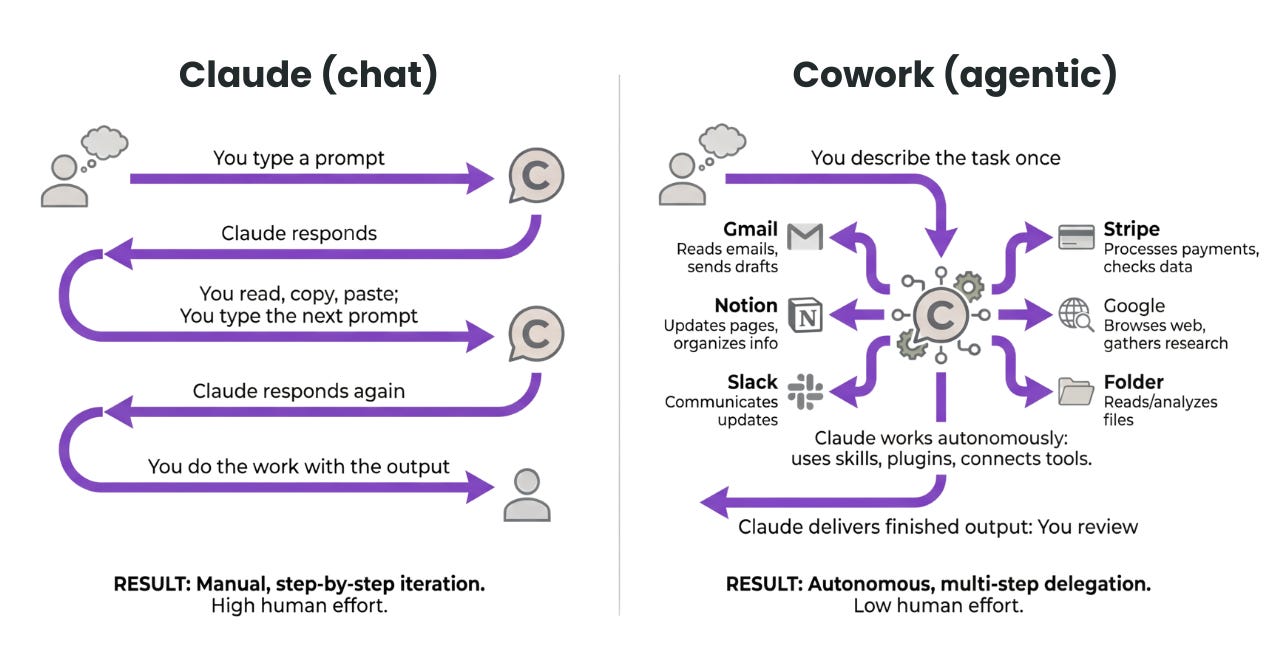
The centerpiece of Code w/ Claude 2026 was the announcement that Claude Code has become a multi-agent platform, not just a coding assistant. Three new primitives shipped.
Outcomes — AI grades its own output
You define a rubric for what success looks like. A separate grader agent scores the output and loops until it passes. It's a shift from "generate and ship" to "generate, verify, retry." Anthropic's internal benchmarks showed an 8.4% quality improvement for Word documents and 10.1% for PowerPoint slides — with no model changes at all.
Multi-agent Orchestration — a lead coordinates a team
A lead agent decomposes complex tasks and delegates pieces to specialized sub-agents running in parallel. Sub-agents share a file system, and the lead monitors mid-workflow progress. Addy Osmani maps this as a three-level pattern: Subagents → Agent Teams → Orchestration at Scale.
Dreaming — agents learn from past sessions
Between sessions, an automated process reviews previous work logs, distills patterns and mistakes into persistent memory, and preloads that memory before the next session starts. It's the feature that increased Harvey's task completion rate by 6x.
| Old Claude Code | Claude Managed Agents | |
|---|---|---|
| Quality check | Manual human review | Outcomes auto-grades and retries |
| Agent count | 1 (sequential) | Lead + N specialists (parallel) |
| Automation trigger | Manual prompt | Routines: cron, GitHub webhooks, API |
| Cross-session learning | Starts fresh each time | Dreaming accumulates patterns |
| Infrastructure | Local CLI tool | Server-managed (sandbox, checkpoints) |
Claude Code itself expanded significantly across surfaces: CLI, IDE (with visual diff tracking), Desktop app (full-screen GUI, image support), and the Claude Agent SDK for external developers. CI auto-fix, Code Review, and Security Review also landed.
Routines is the real unlock
Routines auto-triggers Claude Code tasks via cron schedules, GitHub webhooks, or API endpoints. PRs get reviewed automatically. Security scans run overnight. Failed tests generate fix PRs without anyone touching a keyboard. The shift is from "developer opens Claude" to "Claude works while developer sleeps".
How to get started
- Update Claude Code
Runnpm install -g @anthropic-ai/claude-code. Full Managed Agents features are primarily Enterprise, but some Routines and basic orchestration are available from Pro/Max. - Define an Outcomes rubric
Pick something repetitive — code review or document generation. Write a rubric: "This PR must have no security vulnerabilities and 80%+ test coverage." Let Outcomes loop until it hits that bar. - Write an AGENTS.md file
Give agents project-specific context: conventions, forbidden patterns, common commands. Dreaming uses this file to accumulate learning across sessions. - Wire up Routines
Connect a GitHub repo webhook so Claude auto-responds to PR and commit events. Start with read-only tasks like code review or security scanning before enabling write access. - Adopt multi-agent patterns in stages
Follow Addy Osmani's three-level approach: Subagents (available now, no setup), Agent Teams (experimental, env var), Orchestration (Managed Agents scale). Start with subagents — decompose one task at a time.