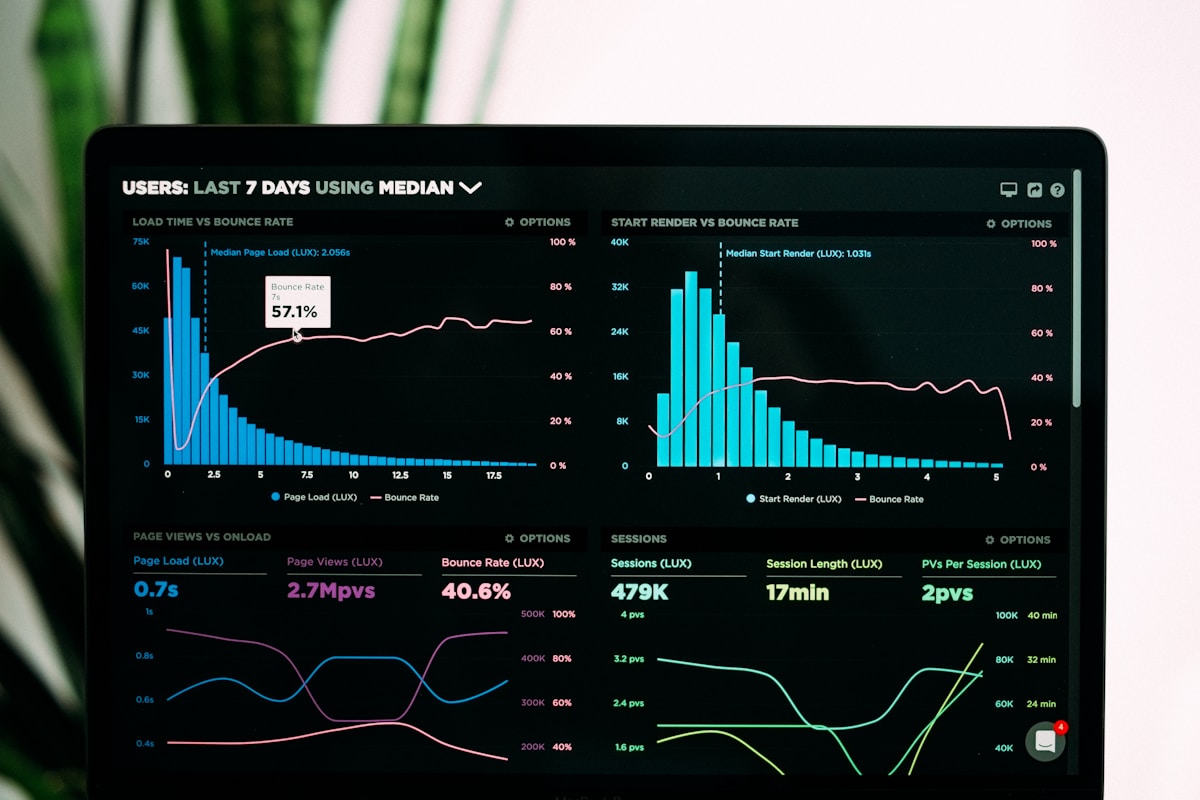
Every morning when you get to work, your GA4 traffic summary, Meta Ads ROAS, and Amplitude funnel analysis are already waiting for you. And you haven't even opened a dashboard.
What Is It?
MCP (Model Context Protocol) is a standard protocol for connecting external tools to AI. Simply put, it lets AI do more than just chat — it can directly access your marketing tools to read and analyze data. Before MCP, Claude only existed inside a chat window. Now it's become a real assistant that connects to actual tools, pulls data, and executes tasks.
There are three MCP servers you can connect right now for marketing. These three cover most of your marketing data needs.
| MCP Server | Creator | Key Features | Notes |
|---|---|---|---|
| Google Analytics 4 | Google (Official) | Traffic, user behavior, conversion data queries | Direct GA4 Data API connection |
| Meta Ads | pipeboard-co (Open Source) | Campaign performance, ROAS, budget management | 500+ GitHub Stars, 29 tools |
| Amplitude | Amplitude (Official) | Funnels, retention, user segments | Officially launched in 2026 |
Let's break each one down.
GA4 MCP is an official server built by Google. Through the GA4 Data API, Claude can directly read your traffic, user behavior, and conversion data. Ask "What changed in organic traffic compared to last week?" and you'll get the numbers without ever opening a dashboard. Setup is straightforward — add the server info to your Claude Desktop config file and connect OAuth authentication from Google Cloud.
Meta Ads MCP is an open-source server for managing Facebook and Instagram ads. It provides 29 tools covering campaign performance, ROAS analysis, audience management, and budget optimization. With 500+ GitHub stars, it's a well-validated project, and it supports Remote MCP so you can connect without any local installation.
Amplitude MCP is an official server built by Amplitude. It connects product analytics data — funnel completion rates, retention curves, user segment comparisons — directly to AI. Ask "Find the onboarding funnel stage where drop-off spiked this week" in plain English, and it queries Amplitude directly for the answer.
Connect all three at once? AI can now cross-analyze the three pillars of marketing data — web traffic, ad performance, and product analytics. Questions like "How does the GA4 conversion rate for users from Meta ads compare to organic?" become possible.
What's Different?
The era of logging into three separate dashboards is coming to an end.
| Before (Manual) | MCP + AI (Automated) | |
|---|---|---|
| Checking Data | Log into GA4, Meta, Amplitude separately | Ask AI in natural language |
| Report Writing | Manual spreadsheet work (30 min–1 hr) | AI auto-generates (under 5 min) |
| Drawing Insights | Manually interpret the data | AI detects anomalies + infers causes |
| Regular Reporting | Manual repetition every week | Fully automated via cron schedule |
| Weekly Time Spent | 2–4 hours | 15 min initial setup, then 0 min |
Teams are already seeing results in production.
Digital marketing agency Two Octobers completely changed their client reporting workflow after connecting GA4 MCP to Claude. They used to spend time logging into GA4, exporting reports, copying data to spreadsheets, and writing up insights. Now they type "Analyze organic traffic changes and causes from last week" and Claude directly queries the data, reasons about the changes, and delivers a polished summary.
Marketing agency Boulder SEO Marketing's Chris Raulf team is using MCP even more aggressively. After connecting Google Calendar, Gmail, and Monday.com via MCP, post-meeting follow-up tasks that used to take 30 minutes now take 5–7 minutes. "Read the transcript from my last meeting on the calendar and add my action items to Monday.com" — two sentences and Claude handles it all. Harold De Guzman (Marketing Director) said he was doing other work while Claude handled tasks in the background. That's what agentic AI actually looks like.
There are even more advanced automation cases. A workflow shared on n8n (a no-code automation tool) pulls Meta Ads data via MCP, has Claude analyze it, then builds a Google Slides presentation and auto-emails it to stakeholders. A 5-slide deck — executive summary, KPIs by channel, top campaigns, underperforming campaigns, and action items — gets generated and delivered automatically every week. Setup takes 15–20 minutes.
If you use Claude Code, there's an even simpler approach. Set up a cron schedule in GitHub Actions and Claude automatically runs every morning at 9 AM to perform designated tasks.
Three Levels of Automation — Start Where You're Comfortable
Level 1 — Conversational: Connect MCP, then ask questions in natural language whenever needed. 5-minute setup.
Level 2 — No-Code Automation: Set up recurring schedules with n8n/Zapier. Auto-generate reports + email distribution.
Level 3 — Code Automation: GitHub Actions cron for daily morning AI reports.
Quick Start Guide
- Subscribe to a Claude Paid Plan
MCP server connections require a paid plan. Claude Pro ($20/month) gets you started. For serious automation, the Max plan is recommended. - Connect the GA4 MCP Server
Add Google's official GA4 MCP server to your Claude Desktop config file (claude_desktop_config.json). Enable the GA4 Data API in your Google Cloud project and connect OAuth authentication. Follow the Pro Analytics Academy step-by-step guide and you'll be done in 10 minutes. - Connect Meta Ads MCP
Generate an access token from Meta Business Suite and add the meta-ads-mcp server config. It supports Remote MCP, so you can connect without local installation. - Set Up Automation Schedule (Optional)
For daily automated reports, you have two options: developers can use GitHub Actions cron (schedule: "0 9 * * *"), non-developers can use no-code tools like n8n. It's fine to skip this initially and add automation once you've established a pattern. - Request Your First Report
"Summarize this week's GA4 traffic and analyze Meta Ads ROAS" — one line is all it takes. AI reads data from all three platforms and delivers a cross-analyzed report.
A Word of Caution
MCP accesses your actual marketing platforms, so be careful with permissions. Start GA4 in read-only mode, and only enable write operations for Meta Ads MCP (like budget changes) after thorough testing. Nobody wants an automated AI changing ad budgets on its own.


.png)