47% of podcasts stop after episode 3. Not because creators run out of ideas — but because making podcasts is exhausting. One episode means recording, editing, transcribing, designing a thumbnail, clipping for social, and distributing across platforms. That's 3–10 hours per episode.
Why is the podcast infrastructure so broken?
There are 584 million podcast listeners globally in 2025, growing to 619 million by 2026. The market is projected to reach $131 billion by 2030. And yet nearly half of all new podcasts die by episode 3.
The reason? Podcast production tools were never designed to work together. Record in Riverside, edit in Descript, clip in Opus Clip, distribute via RSS, handle ads separately. The average new podcaster is juggling 5–7 different subscriptions before getting a single episode live.
Rebel Audio CEO Jared Gutstadt — a two-time Emmy nominee who previously ran Audio Up production company — framed it bluntly: "Podcasting isn't broken. The system behind it is." He built Rebel Audio to replace the fragmented stack entirely.
What's actually different here?
Descript, Riverside, Spotify for Creators — they're all good at specific things. But none of them covers the scenario of "a first-time creator publishes a polished episode in 30 minutes."
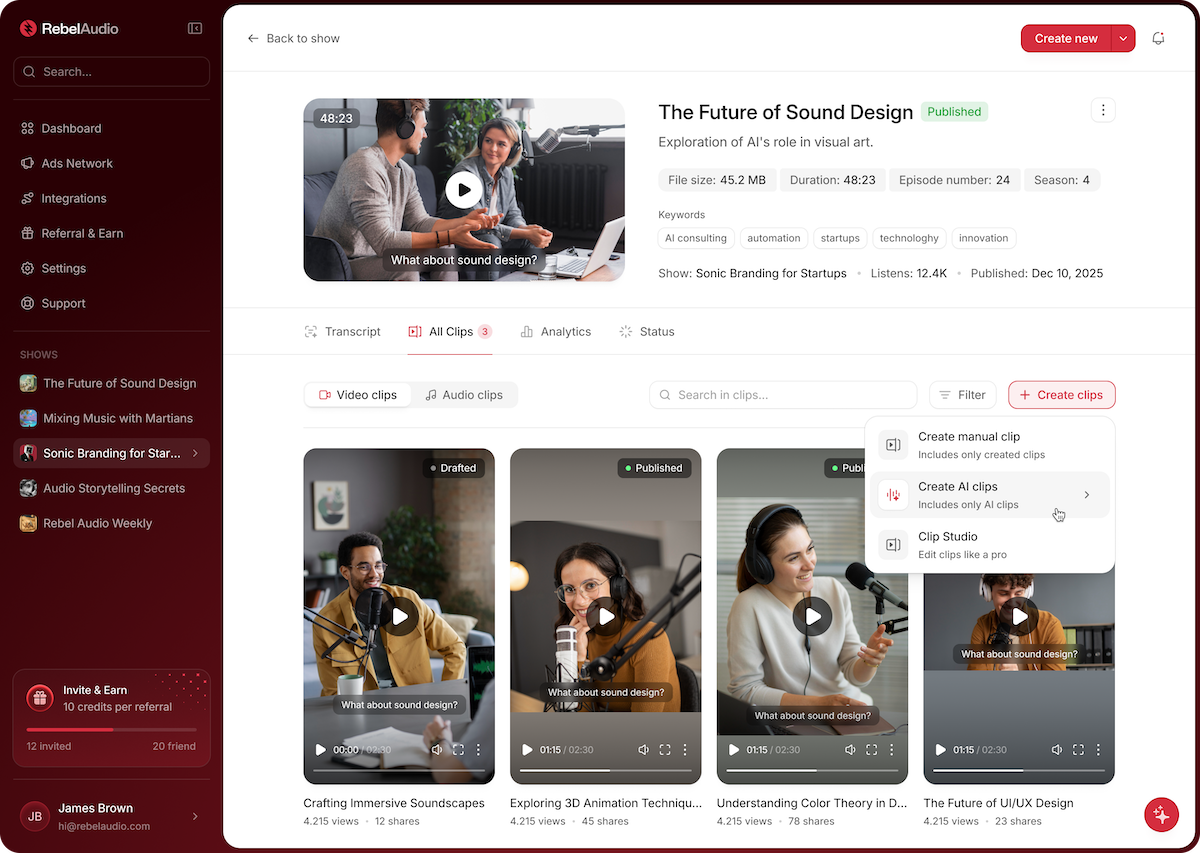
Rebel Audio's three key differentiators: AI-chat-driven production, monetization built in from day one, and everything stays in one platform.
| Old way (multiple tools) | Rebel Audio | |
|---|---|---|
| Editing | Descript / Adobe Audition separately | AI auto-handles it |
| Social clips | Separate Opus Clip subscription | Smart Clips auto-generated |
| Distribution | RSS setup + platform registration | One-click to 10+ platforms |
| Translation | DeepL + separate TTS service | Voice-cloned AI dubbing |
| Monetization | Separate contracts and plugins | Ads + subscriptions built in |
| Monthly cost (basic) | $40–100+ (5 tools combined) | From $15 |
Podcast veteran Mike Majlak (Impaulsive co-host) joined as Chief Creator in Residence with a clear vision: "build the Canva of podcasting." Just as Canva democratized design, Rebel Audio is betting the same playbook works for audio.
How does voice cloning work?
Available from the Plus plan, it trains on your voice so AI can generate host-read ads without you having to record every time. It's fully opt-in — you have to confirm you own the voice — and deepfake prevention is baked in.
How to get started
- Join the waitlist or sign up
Head to rebelaudio.ai to join the waitlist or sign up after the May 30 public launch. Basic ($15/mo) covers AI production, hosting, and distribution. - Upload your first episode audio
Even a voice memo from your phone works. Upload any audio file and AI handles noise removal and editing automatically. - Chat with AI to generate metadata
Talk to the AI agent to generate your episode title, description, and cover art. Natural language like "give me 3 title options with a business podcast feel" is all it takes. - Get auto-generated social clips
AI identifies the most viral-worthy moments from your episode and creates clips sized for Instagram, TikTok, and YouTube Shorts automatically. - One-click publish
Push to Spotify, Apple Podcasts, YouTube, and 10+ other platforms at once. Track listeners and growth across all of them in one unified analytics dashboard.
More resources
Rebel Audio Official Site Full feature overview and waitlist rebelaudio.ai
TechCrunch Launch Article Background on the founding and CEO interview techcrunch.com
Variety — Mark Burnett Advisor Story Founder background and funding details variety.com
Podnews — AI-native Podcast Hosting Industry context for Rebel Audio podnews.net
Grand View Research — Podcast Market 2030 Market size and growth data grandviewresearch.com