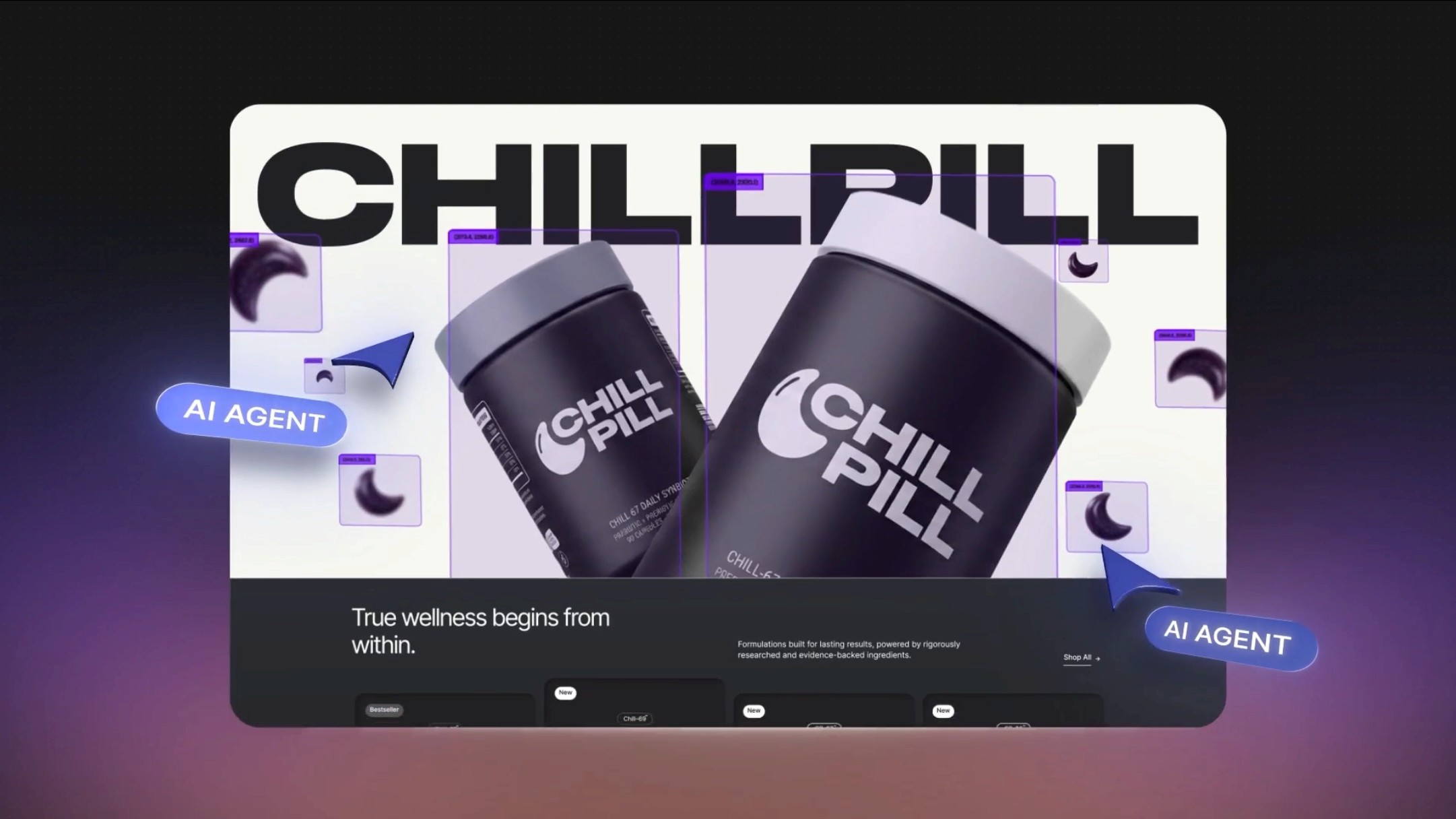
An AI tool made an ad for a skincare brand — and included a 30-day money-back guarantee the brand never offered. Wrong ingredients. Wrong policies. The automation that was supposed to save time created a compliance nightmare.
Creatify Agent is the first AI creative agent built specifically to prevent this.
So what's actually broken with AI ads?
Here's the thing — AI doesn't lie. It fills in gaps with plausible-sounding content. And when you haven't given it verified brand facts as constraints, it'll confidently invent a guarantee, a feature, or a benefit that doesn't exist.
The failure modes are well-documented. Invented product features that create compliance risks. Value props that don't match why your customers actually buy. Avatars that look slightly different in scene one vs. scene three. Brand colors that drift just enough to feel off. Every one of these sends you back into a generate-review-fix-regenerate loop — the exact opposite of what automation was supposed to be.
The real problem
It's not the AI's output — it's the input structure. Without brand facts locked as constraints, generative AI fills gaps confidently and incorrectly. Creatify's answer: lock the facts before generation starts, not after.
The solution isn't better prompting. It's architectural.
What actually changes?
Creatify Agent embeds three hallucination prevention layers into the production pipeline.
At the start of every session, the agent takes your product URL or brief and locks your brand name, ingredients, specs, pricing, and claims as hard constraints. Everything generated — scripts, visuals, characters — operates within those constraints. Then, as each scene is generated, a dedicated critic model runs QA: text rendering, product fidelity, persona consistency. Failed scenes auto-regenerate before you ever see them. And once a character is cast from 1,500+ avatars, it stays consistent across every scene and every variation.
The result: you only ever review content that already passed internal QA. No fixing hallucinations after the fact.
| Standard AI Ad Tools | Creatify Agent | |
|---|---|---|
| Hallucination prevention | Post-generation corrections | Pre-generation fact locking + scene QA |
| Production process | Multiple tools, manual stitching | One conversation, end-to-end |
| Character consistency | Can vary scene to scene | Auto-locked across all scenes |
| Cost per ad | Varies (manual work extra) | $5–$8 |
| Production time | Hours to days | ~5 minutes |
| Revisions | Start over | Conversational, partial updates |
"We didn't build another AI video tool that happens to make ads. We built an agent trained on what makes ads convert."
— Creatify Team
In the independent VideoAdAgent Bench v1 — 20 briefs, 16 systems, ~1,400 pairwise verdicts judged by Claude Opus 4.7 and GPT-5 — Creatify Agent clocked a 94% win rate against competing AI ad agents. The methodology and all verdicts are public.
How to get started
- Create an account
Free plan available — no credit card required. Go to creatify.ai and you'll have access to Creatify Agent immediately. - Write a brief
Start with a product URL or a one-sentence description. The more specific the brief, the more accurate the output — include real specs, claims, and target audience details. - Review the research output
The agent will surface brand analysis, competitor insights, hook options, and script drafts. Approve the direction or redirect it here. - Approve the cast
Review the casting from 1,500+ avatars. Wrong look, age, or energy? Just say so — it recasts. - Review, direct, and receive variations
Watch the output and give notes conversationally. "Tighten the middle section," "change the CTA to Shop Now." The agent revises and delivers platform-native variations — multiple formats, one conversation.
Keep in mind
Hallucination prevention isn't foolproof. If your brief is vague, errors can still slip through. The more explicit you are about brand facts — ingredient names, certifications, guarantee terms — the better the output quality.

.png)