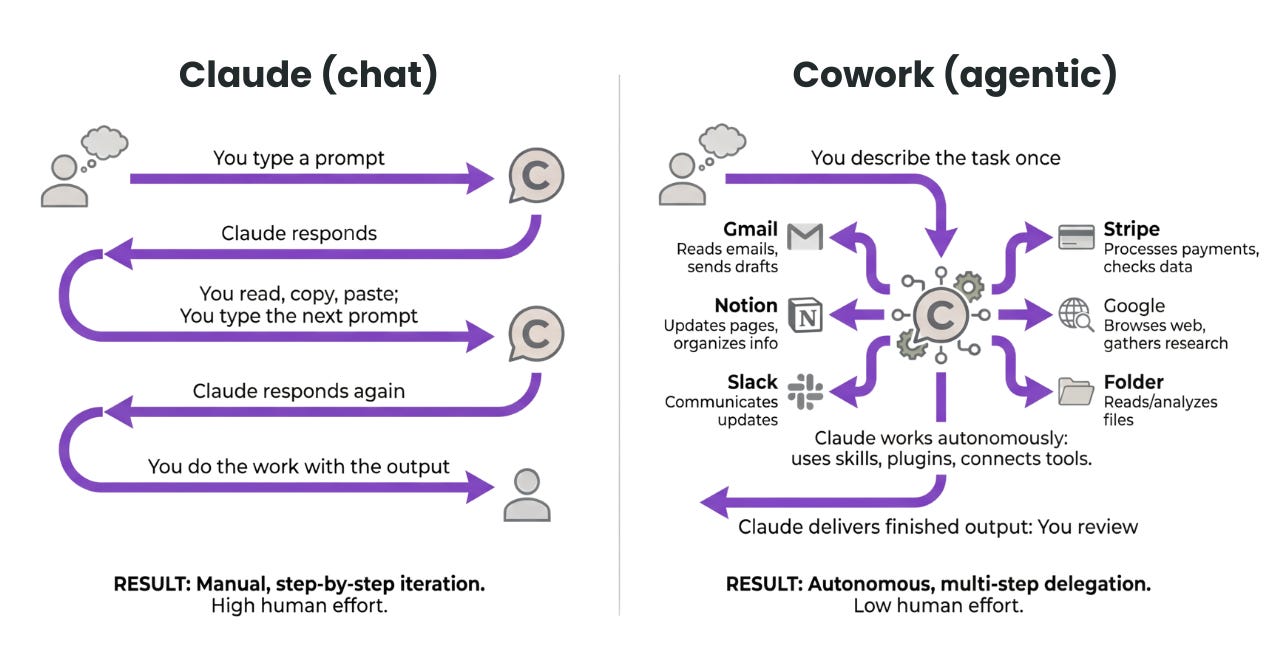
Companies are deploying AI agents. But many say results fall short of expectations. The reason is simple: almost no enterprise task is solved by a single agent.
Why won't a single agent cut it?
If you split business automation into "what can be codified" vs. "what requires judgment," AI agents shine in the latter. But in real enterprise work, tasks requiring judgment almost always span multiple domains.
Take customer complaint handling. Classify the complaint (classification agent), check contract terms (document retrieval agent), look up compensation policy (policy agent), draft a response (generation agent), request final approval. If any one step fails, everything stops.
The bottleneck in enterprise AI automation isn't agent performance — it's the orchestration layer that connects agents to each other.
What's wrong with standard pipelines?
Most enterprises implement AI automation as sequential pipelines: A finishes, then B, then C. Three structural problems with this approach.
- Brittleness
If one middle step fails, the entire process halts. Without error recovery logic, human intervention is required — eliminating the biggest advantage of automation. - Rigidity
Can't handle exceptions. Rule-based pipelines can't process situations outside their designed path. Real-world work always has exceptions. - No parallelism
Sequential pipelines process tasks one at a time even when parallel execution is possible. Legal review, technical review, and budget review could happen simultaneously but instead wait in line.
What makes multi-agent orchestration different?
An orchestration layer is the control plane that coordinates multiple specialized agents. Three characteristics distinguish it from simple pipelines.
| Feature | Sequential Pipeline | Multi-Agent Orchestration |
|---|---|---|
| Error handling | Full stop | Agent retry or alternate path |
| Parallelism | Sequential execution | Independent tasks run simultaneously |
| Specialization | General-purpose single agent | Domain-specific specialized agents |
| Flexibility | Only handles designed paths | Dynamic response to exceptions |
According to a 2026 CACM analysis, multi-agent systems are reshaping enterprise automation because they handle workflows that require complex judgment — beyond what rule-based codification can capture. This is the key: going past the domain of what can be codified.
Implementation pattern: hierarchical orchestration
The most widely used pattern is the Orchestrator-Worker structure. An orchestrator agent receives the overall goal, decomposes it into subtasks, and distributes them to specialized worker agents. Workers execute in parallel and report back. The orchestrator aggregates results, decides next steps, or produces the final output.
Quick start: designing your orchestration layer
- Map your task decomposition
Break the workflow you want to automate into independently executable subtasks. "What can run simultaneously?" is the criterion for parallelization. - Design agent specialization
Define the right specialized agent for each subtask. A structure with several specialized agents cooperating is more stable than forcing one generalist agent to do everything. - Specify error recovery strategies
Design upfront what happens when each agent fails: retry, alternate agent, or human-in-the-loop trigger. One of these three must exist at each step. - Choose an orchestration framework
Evaluate LangGraph, AutoGen, CrewAI, and others. Each differs in how agents communicate, manage state, and handle errors.
Go deeper
Multi-Agent Systems Will Rescript Enterprise Automation in 2026 CACM's analysis with academic grounding on how multi-agent systems reshape enterprise automation. cacm.acm.org
LangGraph The practical framework for building stateful multi-agent workflows. Implement orchestration patterns directly in code. langchain-ai.github.io/langgraph