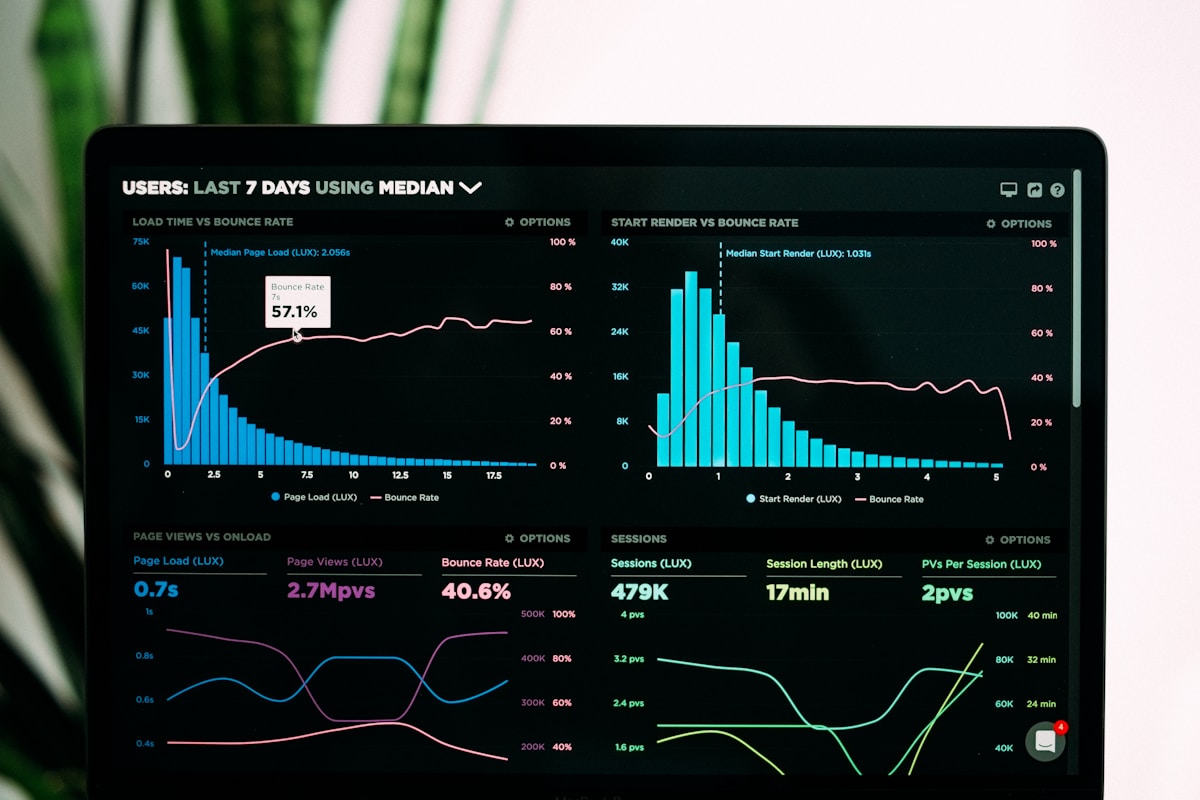
The moment AI Overviews appear, 58% of clicks from top-ranked Google content disappear. Those clicks didn't vanish — AI took them.
Here's the thing though: visitors who arrive via AI convert at 4.4× the rate of regular search traffic. The rules have changed, but most people are still playing by the old ones.
Why is traffic dropping even with great SEO?
SEO still works. About 40% of Google AI Overviews pull from top-10 organic results — there's no reason to abandon it.
The problem is that SEO alone can't cover the entire AI search ecosystem. As of Q1 2026, AI search engines handle 12–18% of English informational queries — up from under 2% just a year ago. The growth is staggering.
More importantly: the overlap between top Google results and AI-cited sources has dropped from 70% to under 20%. Ranking #1 on Google no longer means AI will cite you too.
Easy to mix up
GEO and AEO look similar but optimize for completely different goals, content formats, and success metrics. One strategy can't capture both.
GEO vs AEO — what's actually different?
It's natural to confuse them. The fundamental difference is what you're optimizing for.
AEO (Answer Engine Optimization) targets zones where users get direct answers to their questions — Google Featured Snippets, AI Overviews, and voice search. Content needs to be structured as a direct answer, with FAQs and structured data (schema markup) as core components.
GEO (Generative Engine Optimization) ensures AI chatbots like ChatGPT, Perplexity, and Claude cite your content as a source when generating responses. Authority, original data, and transparent sourcing are what matter here.
| SEO | AEO | GEO | |
|---|---|---|---|
| Goal | Rank higher in SERPs | Appear in AI direct-answer zones | Get cited in AI-generated responses |
| Target | Google/Bing SERPs | Featured Snippets, AI Overviews | ChatGPT, Perplexity, Claude |
| Key signals | Keywords, backlinks | Direct answers, FAQPage schema | Original data, E-E-A-T, citations |
| Content format | Keyword-optimized long-form | 40–60 word answer capsules | In-depth analysis with cited data |
| Success metric | Rankings, organic traffic | Featured Snippet inclusion rate | AI citation frequency, brand mentions |
Different platforms, different rules
The biggest GEO insight: ChatGPT and Perplexity select content in fundamentally different ways. One strategy can't capture both.
| Platform | Preferred sources | Key signals | Core strategy |
|---|---|---|---|
| Perplexity | Reddit (46.7%) | Recency, clear citations | Refresh every 3 months + direct answer in first paragraph |
| ChatGPT | Wikipedia (47.9%) | Authority, broad sourcing | Encyclopedia-style structure + diverse citations |
| Google AI | Reddit(21%), YouTube(18.8%) | E-E-A-T, schema markup | FAQPage/HowTo schema + strong SEO |
| Claude | Brave Search index | Logical structure, traceable sources | Allow ClaudeBot + cite primary sources |
| Grok | X real-time data | Social mentions, timeliness | Build active brand presence on X |
A standout stat: roughly 40% of all AI citations trace back to Reddit. Without authentic brand conversations there, you're at a disadvantage across multiple AI platforms at once.
The triple-layer checklist you can start today
If running all three strategies at once feels like too much, stack them layer by layer. SEO is the foundation, AEO goes on top, then GEO.
- Verify AI crawler access (foundation)
Check that GPTBot, OAI-SearchBot, PerplexityBot, and ClaudeBot aren't blocked in your robots.txt — and audit Cloudflare bot-blocking settings too. If these crawlers are blocked, no amount of great content will get indexed by AI. - Add answer capsules to your top 5 pages (AEO)
Lead each section with a 40–60 word direct answer. "X is Y, because Z." Add FAQPage schema alongside it to boost your chances of appearing in Google AI Overviews. - Add original data and citations (GEO)
Content with specific stats and cited sources boosts AI visibility by up to 40%. "According to X's 2026 report, Y%" gets cited far more than vague unsourced claims. - Build Reddit presence (GEO platform strategy)
40% of AI citations trace back to Reddit. Leave genuinely helpful answers in subreddits related to your product category. Promotional content backfires — authentic answers are the only thing that works. - Refresh core content quarterly (freshness)
83% of AI citations come from content updated within 12 months. A full rewrite isn't required — adding fresh stats and updating the date still sends meaningful freshness signals.
Your KPIs need updating too
In GA4, create a segment tracking traffic from chatgpt.com, perplexity.ai, and gemini.google.com — then compare conversion rates against organic search. The volume will be lower, but the conversion rates will be meaningfully higher. The right frame isn't "clicks are falling" — it's "better visitors are arriving."
Want to go deeper?
What is Generative Engine Optimization? GEO vs AEO vs SEO Guide 2026 Jasper's official GEO and AEO guide, covering diagnostic tools and platform-specific optimization. jasper.ai
SEO GEO AEO 뜻, 차이 — 최적화 방법 전략 총정리 (2026) A Korean-language practical breakdown of all three strategies. blog.lead-gen.team
Generative Engine Optimization: The Complete 2026 Guide Platform-by-platform GEO tactics and GA4 measurement in depth. enrichlabs.ai
AEO 2026 Playbook: Perplexity, ChatGPT, Google AI Mode A 30/60/90-day AEO implementation plan broken down by platform. johnpaulhernandez.com
AB180 Blog — SEO, GEO, AEO Difference Data-driven analysis from a Korean marketing perspective. blog.ab180.co
GEO: Rank in AI Search 2026 — LLMrefs Technical breakdown of platform GEO signals and GA4 measurement. llmrefs.com

.png)