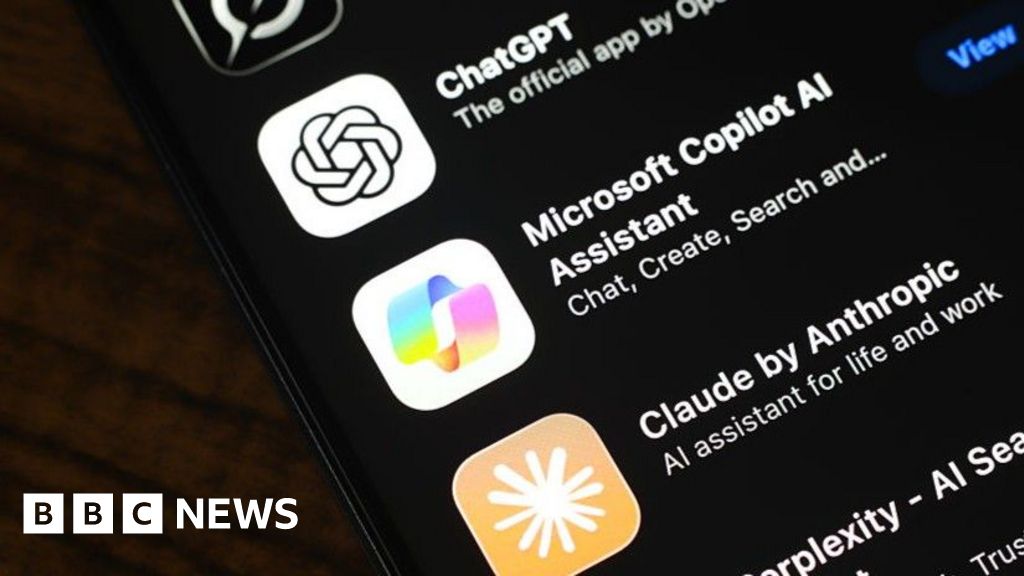
HubSpot lost 140 million website visits in a single year. It wasn't bad advertising or declining content quality. AI search fundamentally rewired how traffic flows.
What's Actually Happening?
Two tectonic shifts are reshaping search simultaneously. First, traditional search engines like Google and Bing now display AI summaries at the top of results — users get their answers without ever clicking through. This is zero-click search. Second, a growing number of people are skipping Google entirely and going straight to ChatGPT or Perplexity.
Bain & Company's February 2025 survey of 1,117 consumers found that 80% rely on zero-click AI summaries in at least 40% of their searches — and roughly 60% of all searches now end without a click. HubSpot CMO Kipp Bodnar put it plainly: "The click-through rate for searches that have AI Overviews is about 60% to 70% lower."
This creates a paradox: you can rank #1 on Google and still watch your traffic decline. Rankings stay intact while visitors disappear. That's the reality thousands of businesses are living right now.
What Changes — and Why It Matters
Traditional SEO operated on one logic: rank higher, get more clicks. AEO (Answer Engine Optimization) has a different goal. The objective is to get your brand cited inside AI-generated answers — not to drive clicks, but to earn mentions.
| Traditional SEO | AEO (Answer Engine Opt.) | |
|---|---|---|
| Goal | Higher rankings → more clicks | Get cited inside AI answers |
| Key Metrics | Rankings, CTR, organic traffic | AI mentions, citation share, AI referral traffic |
| Content Format | Keyword density, long-form articles | Question-based headers, direct answers, short chunks |
| Success Benchmark | Page 1, Position 1 | Brand mentioned in ChatGPT, Perplexity, Gemini |
| Conversion Rate | Baseline | AI referral visitors convert 4.4x higher |
HubSpot's own data is striking. After implementing AEO, traffic arriving through AI search converted at 3x the rate of organic search. Fewer people come in, but the ones who do have already done their research and made their decision inside the AI interface before clicking through.
MKM Building Supplies digital director Andy Pickup observed the same thing. "My theory is that customers have got the information they need from the LLM answer, which gives them confidence to make a purchase." MKM's AI referral traffic grew from near-zero to double-digit percentages in a single year — and it's still climbing.
AEO and SEO aren't enemies
Here's the thing — they're complementary. Most of the foundational work (content credibility, structured data, backlink authority) lifts both. The shift is in format and measurement: question-based content structure, and tracking citations instead of clicks. Start with AEO as an addition, not a replacement.
How to Start: The Essentials
- Restructure content with question-based headers
Reformat existing long-form articles so each section starts with a direct question header, followed by a 40-60 word answer before the detail. AI extracts individual passages, not whole pages. HubSpot rebuilt its content from long product explainers into small, self-contained chunks — one per feature, each answerable on its own. - Build FAQ sections into every piece
MKM's biggest AEO win came from adding FAQs, bullet summaries, and structured lists to content. "Real question → short, direct answer" — this format is exactly what AI models extract and cite. Don't write FAQs for humans only; write them for AI crawlers too. - Strengthen E-E-A-T trust signals
AI citation behavior mirrors Google's quality signals. Author bios, publication dates, cited sources, and earned backlinks all matter. Content that reads like journalism or research — with named experts and verifiable claims — gets cited. Generic brand content does not. - Build presence where AI looks
Reddit, LinkedIn, YouTube, industry review sites — these are the sources AI models trust and cite. Authentic participation in third-party platforms builds the "multi-source consensus" that answer engines look for when recommending solutions. - Track AI referral traffic separately
In GA4, segment chatgpt.com, perplexity.ai, and gemini.google.com as distinct referral sources. Compare conversion rates, session duration, and purchase rates against organic. You'll likely see a significant gap — and that gap is your argument for investing in AEO now.

.png)
