Loading...

Video generation model · Kling 4.0

No cameras, no actors. We handed the scenes to AI and got a nearly three-minute short film full of real back-and-forth dialogue

Give Kling 4.0 character and scene images plus a voice as references, and it generates scenes up to 30 seconds long in one pass, with mouth movements that match the sound. It was announced on Sept. 28 and opened to everyone on Oct. 15. Here are the examples we collected: a dialogue-driven short film, the first episode of a noir series, and a hip-hop music video.

Oct 26, 2026·3 cases

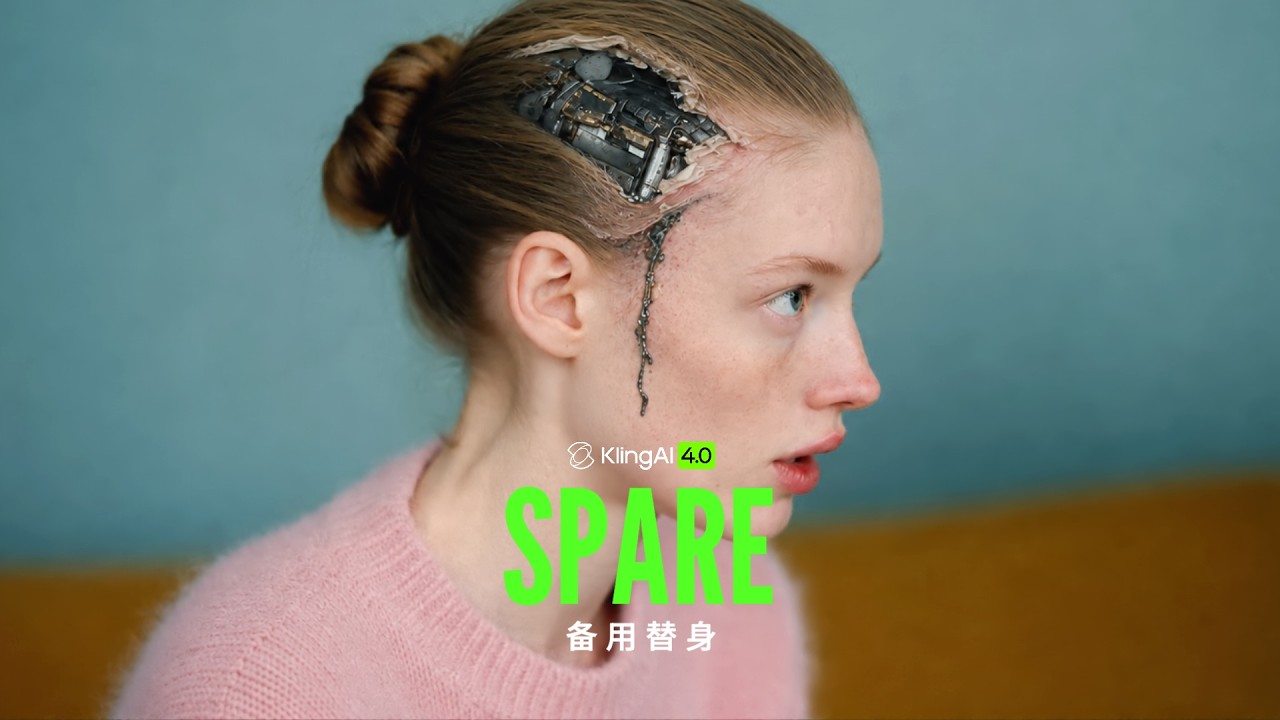
Full video of "SPARE," a dialogue-driven short film 汗青 HQ made with Kling 4.0 (2:55)
汗青 HQ made the short film "SPARE" after Kling granted early access to the full version. Source: AI Talk, 汗青 HQ's YouTube channel

On Sept. 29, 汗青 HQ (@hq4ai), who makes AI films and virtual idols, posted "SPARE," a 2:55 dialogue-driven short film made with Kling 4.0, on X and on their own YouTube channel, AI Talk. It was made with early access from Kling, before the full version opened to everyone. The Chinese-language post on X has passed 269,000 views, and the YouTube video has passed 50,000. One YouTube viewer commented: "i clicked this vid based on thumbnail and didnt read anything, and for the first few seconds, i thought i watched real people."

Kling 4.0 is a model that Kling AI, the video generation service from China's Kuaishou, announced on Sept. 28. On launch day, a preview version called Flash opened first to Ultra annual subscribers. The full version opened to all users on Oct. 15, and the API began rolling out on Oct. 21. Kling has also released its own launch video and a short film, "The Beat."

Describe a scene in text and add up to 15 references, such as character and scene images, video, and voice, and it generates video with sound, 3 to 30 seconds per generation. Instead of references, you can also set the flow of a scene with up to 10 scene images as keyframes. Prompts don't have to be in English. Korean works too.

Reference 01汗青 HQ (@hq4ai), who runs the AI media brand AI.TALK and makes AI films and virtual idols · X, YouTube

A nearly three-minute dialogue drama made with AI and no actors passed 260,000 views on X

汗青 HQ used the full version of Kling 4.0 and its reference input feature (Omni Reference) to make a short film in 21:9, the wide frame of a cinema screen. The video description sums up what the full version does better: "the full version is far stronger than Flash, especially in dialogue-driven acting." Kling 4.0 generates up to 30 seconds at a time. The public description doesn't say how the 2:55 film was split into scenes or how the scenes were joined.

The film was made before the full version opened to everyone. In the X post, 汗青 HQ wrote "Thanks to Kling AI for early access," making clear that Kling had granted early access.

Reference 02Domi Vakero, an art director in Seville, Spain, working since 2008 · YouTube

An art director generated the shots in Kling 4.0, did the editing and color grading by hand, and released a 69-second hip-hop music video

Domi Vakero made "Living Together," a 69-second hip-hop music video, with Kling 4.0 and posted it on YouTube. The credits say the direction, characters, editing, and color grading were done by Vakero ("Original visual direction, characters, editing and colour grading by DOMIVAKERO"). The goal was "exploring stable character motion and visual consistency across shots."

A scene from Domi Vakero's hip-hop music video "Living Together"

Reference 03BK Phantom Productions, maker of an original noir series · YouTube, Reddit

A first-time noir series creator released a 2:09 first episode made with Kling 4.0

BK Phantom Productions generated scenes with Kling 4.0, edited them in CapCut, and posted "JACK VAYLOR: Bad Dreams" (2:09), the first episode of a cyberpunk noir series, on YouTube and Reddit. The Reddit post reads: "This is my first attempt at creating an original cinematic noir series using Kling 4.0."

A noir scene from "JACK VAYLOR: Bad Dreams"

How people reacted

What people liked

  • “Exceptionally good movement and prompt understanding”

    A first-impressions post after trying Kling 4.0 during the Flash period.

    Jack_P_1337 · Reddit r/KlingAI_Videosreddit.com
  • “it looks like a legit anime. It does not look like AI.”

    Said after making an '80s-style anime scene with Kling 4.0.

    Aaron Randall · YouTube (The Sketch Lab)youtube.com
  • “I think you captured the Noir style really well”

    A comment on the "JACK VAYLOR: Bad Dreams" post.

    Webhoard · Reddit r/aivideoreddit.com

What fell short

  • “it just really looks like waxy skin”

    Said after making an interrogation scene with dialogue using the same character.

    Aaron Randall · YouTube (The Sketch Lab)youtube.com
  • “even though it's cheaper, I find myself generating several times, which that adds up.”

    Said after regenerating a monster fight scene more than eight times.

    Aaron Randall · YouTube (The Sketch Lab)youtube.com
  • “Super inconsistent.”

    A comment on a bamboo-forest martial arts scene made with Kling 4.0 Flash, pointing out that the characters, moves, and weapons change with every cut.

    ConstantinGB · Reddit r/KlingAI_Videosreddit.com
  • “kling still has this ai feel. seedance remains king.”

    @designcalligraphy7395 · YouTube commentyoutube.com
  • “Kling is way cheaper so I could see using it for a lot of things that don't involve dialog.”

    The commenter still rated Seedance higher but said Kling 4.0 is a big improvement over the previous version.

    @davidnappyhoose204 · YouTube commentyoutube.com

How to start

Paste the request below into an AI such as Claude or ChatGPT. Then open kling.ai on the web, choose Kling 4.0 as the model, and paste in the prompt you got back. You need a Kling account. Check the Kling site for which plans and regions have access.

  1. Starter prompt

    Look at the Kling 4.0 examples collected at https://www.working-ref.com/en/reference/kling-4-0-2026-10 . First ask me about my work and interests, then suggest three scenes under 30 seconds that would be worth making with Kling 4.0. When I pick one, write a prompt I can paste straight into kling.ai, broken into time segments by the second. Then pick whichever fits better, the reference method (character and scene images plus voice) or the keyframe method (several scene images), and tell me what to prepare. If none of the ideas fits, start with a scene where two characters talk to each other, like the first example.

    Reference inputs (images, video, voice) and keyframes can't be used together in the same job.

Share this reference

Weekly · Free

Was this reference helpful?

The week in AI: the BEST
just 3, straight to your inbox

Work Smarter with AI

420 readers get it every week

You're in See you in your inbox with the next issue.