Anthropic announced MCP on November 25, 2024. Eighteen months later, the protocol has moved under the Linux Foundation, SDK downloads are hitting 97 million a month, and registered servers have crossed 10,000. Over that same stretch, Garry Tan posted "MCP sucks" on X, and Perplexity CTO Denis Yarats announced at the Ask 2026 conference that they're pulling MCP out internally and going back to REST APIs and CLIs. It's not dead. But the core takeaway from 18 months out is that it's stepped down from the "default" slot.
What Happened Over 18 Months?
MCP's adoption curve was unusually fast. In March 2025, OpenAI added official MCP support to its Agents SDK and Responses API. That same month, Streamable HTTP transport arrived, making remote server deployments practically viable. Then came Google at I/O in June with Gemini support, Microsoft at Build 2025 declaring it a "foundational layer" for Windows 11, and in March 2026, AWS rolled out stateful MCP server support in Bedrock AgentCore Runtime across 14 regions. In December, Anthropic donated MCP to the Linux Foundation's Agentic AI Foundation.
Single vendor → neutral governance + adoption across every major cloud. That combination happening in 18 months is genuinely unusual.
The numbers make it even clearer.
- 97M
Combined monthly downloads of the Python and TypeScript SDKs. - 10,000+
Registered MCP servers. About 2,000 are indexed in the MCP Registry. - 150+
Organizations backing the A2A (Agent2Agent) protocol — a complementary standard growing alongside MCP.
Then in January 2026, MCP Apps launched, expanding the originally text-based protocol to support interactive UIs. Amplitude, Asana, Box, Canva, Figma, Slack, and Salesforce all joined as launch partners.
So Why Did the Backlash Hit?
It started on February 28, 2026, with Eric Holmes's post "MCP is dead. Long live the CLI." On March 11, Y Combinator president Garry Tan fired a shot on X: "MCP sucks honestly — it eats your entire context window and auth is a mess," then published his own CLI wrapper called "gstack." Days later, Perplexity CTO Denis Yarats made it official at Ask 2026: they're pulling MCP out of internal use. The criticism isn't emotional. It's measured against three specific operational walls.
| Pain Point | Measured Problem | Alternative Pattern |
|---|---|---|
| Token Overhead | Connecting 3 servers consumes 72% of a 200K context. Tool selection accuracy drops from 43% to 14%. | Skills (progressive disclosure) + Cloudflare Code Mode (−98% tokens) |
| Security Defaults | Of 119 verified publicly exposed servers (scanned from 1,862), every single one was unauthenticated. 41% of servers have no auth at all. | Gateway + OAuth 2.1 + CIMD enforcement |
| Remote Scaling | Stateful sessions, horizontal scaling, and gateway behavior are all undefined. | AWS AgentCore-style stateless streamable-HTTP |
The token overhead numbers are striking. The MCPGAUGE paper published in 2025 found that "MCP integration reduces average accuracy by 9.5 percentage points and increases input token counts by 3.25× to 236.5×." On a 200K context model, just attaching the GitHub, Playwright, and IDE servers eats up 143K with tool definitions. You've got 30% left before actual work even starts.
"context rot" — the more tools you add, the more the model gets lost. Tool selection accuracy fell from 43% to below 14%.
The security picture is worse. Knostic scanned 1,862 internet-facing MCP servers in early 2026 and verified 119 of them — every single one allowed unauthenticated access to internal tool listings. Bitsight found roughly 1,000 servers with no authorization controls, and a separate analysis found 41% of 518 servers had no authentication. Cloudflare's own official guide still lists "without authentication" as a normal deployment option. It's an operational hygiene problem.
The problems with local stdio MCP (tokens, security) are real. But enterprise remote HTTP MCP is a different conversation. When Slack, Cursor, Claude Code, and internal assistants all call the same server, MCP is the only thing that lets you enforce OAuth, auditing, and telemetry from one place. The question isn't "is MCP dead" — it's "which mode are you running?"
So What Should You Actually Pick Right Now?
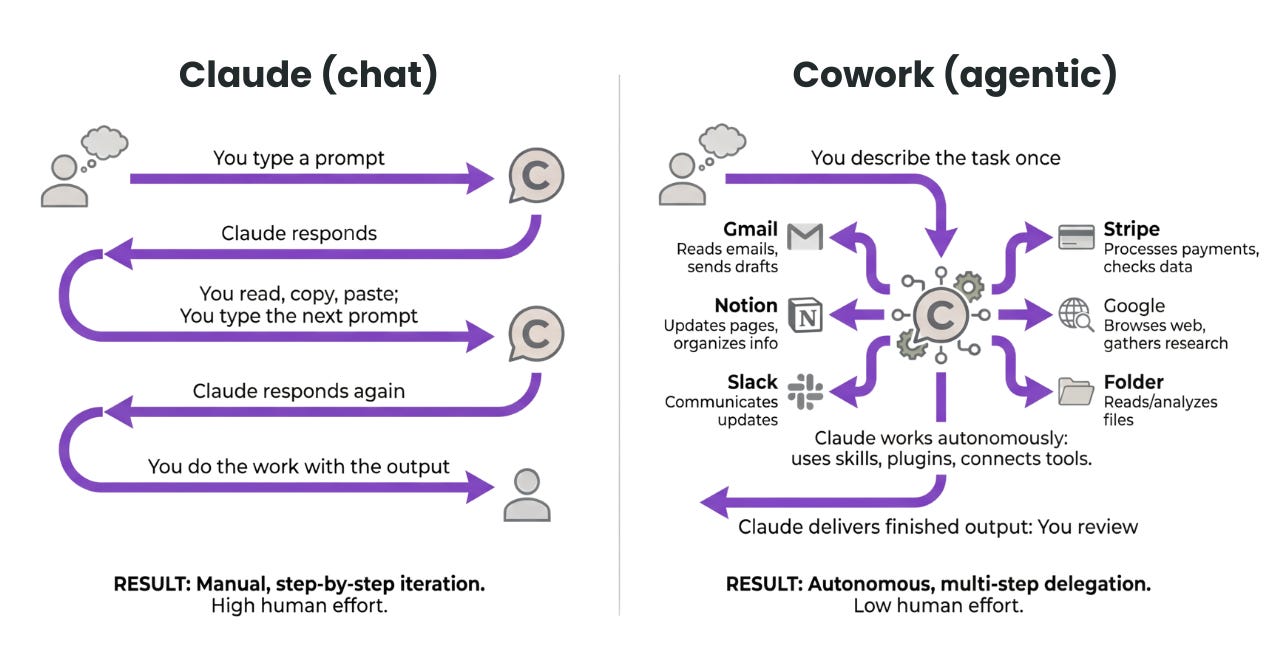
In practice, the most useful setup is CLI + RESTful + Skills + MCP where it earns its keep. Here's the decision flow.
- Is it a local, single-user workflow?
Yes → CLI or Skills. The model already knows git/curl/jq/aws. MCP is overhead here. - Do you own both sides (client and tool)?
Yes → REST API. You don't need an interop standard. No → next question. - Do you need multiple hosts (Cursor, Claude, ChatGPT) sharing the same tools and policies?
Yes → remote HTTP MCP. Integrate once, use N times. This is where MCP actually earns its keep. - Does your enterprise need OAuth, SSO, and audit logging?
Yes → MCP + WorkOS/Glean-style Gateway pattern. Auth standards are guaranteed.
What's interesting is Cloudflare's "Code Mode." Instead of preloading all tool definitions upfront, it lets agents dynamically discover and call tools — cutting token usage by over 98%. That's the direction SEP-1576 ("Mitigating Token Bloat in MCP") is heading: progressive disclosure, schema deduplication, tool search. If these patterns become the default, MCP's first big wall comes down.
The MCP Dev Summit is being held in New York on April 2–3, 2026. Hosted by AAIF and the Linux Foundation, with every major cloud vendor signed on as a sponsor. Developer sentiment is wobbly, but governance and ecosystem investment run on a different clock. That's the signal.