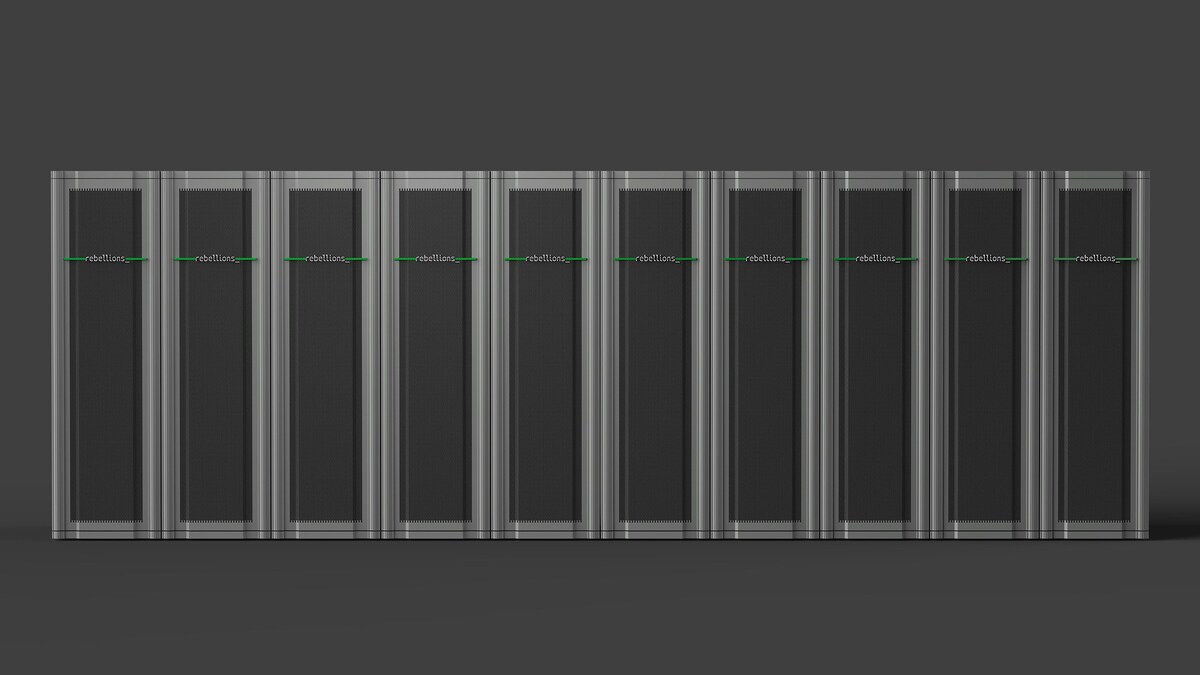
One Korean startup pulled in $650 million in just six months — most of it from insurers, pension funds, and the government itself. The whole bet boiled down to one line from CEO Sunghyun Park: "AI''s center of gravity is moving from chips to inference infrastructure".
What just happened?
On March 30, 2026, Korean fabless AI chip startup Rebellions announced it had closed a $400 million pre-IPO round. The raise was co-led by Mirae Asset Financial Group and Korea''s National Growth Fund, and valued the company at roughly $2.34 billion.
The timing matters. Rebellions already raised $250 million in a Series C last November. Add this $400 million on top, and $650 million has flowed in over the last six months. Total funding to date: $850 million. This isn''t just another round — it''s the last tune-up before going public.
The political layer is the real story. Korea''s National Growth Fund put 250 billion won (about $165M) into this round — the first direct deployment of the K-Nvidia initiative, the government''s plan to grow domestic AI chip champions while the US doubles down on NVIDIA.
Quick refresher on the company. Founded in 2020, Rebellions designs NPUs (neural processing units) and outsources fabrication. It deliberately skipped training and went all-in on AI inference chips. After merging with SK Telecom''s chip subsidiary Sapeon last year, it became Korea''s "national AI chip champion". The investor list now reads: Samsung, SK Hynix, KT, SK Telecom, Arm, and Saudi Aramco''s Wa''ed Ventures.
Why is everyone betting on inference chips?
The real signal here is that the market''s center of gravity has shifted from training to inference. Park told CNBC: "AI is now measured by its ability to operate in the real world at scale, under power constraints, and with clear economic return".
Once an LLM goes commercial, "training it once" is dwarfed by "answering billions of queries every day." Inference is a game where power efficiency directly becomes margin.
| NVIDIA H200 (general training+inference) | REBEL-Quad (inference-only) | |
|---|---|---|
| Throughput (TPS) | x1.0 (baseline) | ~ x0.9 |
| Efficiency (TPS/Watt) | x1.0 | ~ x1.8 |
| Power consumption | x1.0 | ~ x0.2 (50% less) |
| Architecture | Monolithic GPU | UCIe-Advanced chiplet |
Per benchmarks compiled by eesel AI, the REBEL-Quad lags slightly on raw throughput but delivers nearly 2x the performance-per-watt. For data centers, that means more inference workloads on the same power budget — a meaningful TCO advantage over NVIDIA at scale.
One more competitive note. Rebellions isn''t really competing with NVIDIA directly — it''s in a knife fight with other inference specialists like Groq and Cerebras. Per CNBC, NVIDIA bought Groq for roughly $20 billion last December, an admission that even NVIDIA can''t cover the entire inference market with GPUs alone. Park named Meta and xAI as Rebellions'' main targets — not the hyperscalers like AWS or Microsoft.
Korea''s one structural advantage
Park''s key point on CNBC: Rebellions is in the best possible spot for memory supply. Both HBM giants — Samsung and SK Hynix — are investors and suppliers. With memory shortages now a global problem, that supply line gives Rebellions a real edge over other inference startups.
What should operators take away?
This round isn''t just a chip-company raise. It''s a geopolitical signal about who owns AI infrastructure. Five takeaways for operators, investors, and AI builders.
- Track the K-Nvidia momentum
The National Growth Fund just made Rebellions its first investment. Korea is officially betting public money on AI infrastructure. Expect follow-on capital to flow into other NPU fabless plays — Furiosa AI, Mobilint, etc. Watch related public stocks, B2B sales openings, and government RFPs. - Treat sovereign AI as a sales angle
Park told reporters his goal is "exporting Korean success to global markets and building AI sovereignty". Aramco''s investment fits the same theme — governments and telcos increasingly want AI to run on their data and their infrastructure. If you sell consulting, SI, or MLOps, "sovereign AI" belongs in your pitch deck. - Make inference cost a product differentiator
Switching inference accelerators on the same model can cut token costs 30–50%. Builders should start asking, "what hardware are we actually running on?" Rebellions ships native support for vLLM, PyTorch, Triton, and Hugging Face — you can test without rewriting code. - Watch IPO timing — KOSDAQ vs Nasdaq
Park stayed silent on timing and venue but confirmed an IPO is being prepped "this year". Whether it lists on KOSDAQ or Nasdaq will reset multiples for the entire Korean AI infra sector. - Diversify your NVIDIA exposure
Everyone''s queueing for NVIDIA right now, but inference-chip diversification is accelerating fast. AWS Trainium2, Google TPU v6, Groq, Cerebras, and now Rebellions. If you have infra-decision authority, having at least one NVIDIA alternative in your PoC pipeline is just sane planning.
Go deeper
TechCrunch — Rebellions $400M Pre-IPO Coverage Lucas Ropek''s primary report including company comments and details on the new RebelRack/RebelPOD products techcrunch.com
Rebellions Official Press Release (PRNewswire) Full Park Sunghyun quotes, RebelRack/RebelPOD specs, and the complete investor lineup — the most detailed primary source prnewswire.com
Reuters — K-Nvidia Initiative Analysis The clearest framing of the K-Nvidia "first direct investment" angle and Korea''s industrial policy context reuters.com
CNBC — Park Sunghyun Exclusive Interview The richest interview, covering the Meta/xAI targeting strategy, memory supply edge, and IPO prep cnbc.com
eesel AI — REBEL-Quad vs NVIDIA H200 Benchmark Operator-friendly breakdown of the chiplet architecture and performance-per-watt comparison eesel.ai
Forbes — Korea''s AI Chip Champion Backstory on the Rebellions–Sapeon merger and Korea''s national chip strategy forbes.com
DataCenterDynamics — Rebellions Series C Coverage Earlier coverage of the November Series C round and Arm/Samsung Ventures involvement datacenterdynamics.com