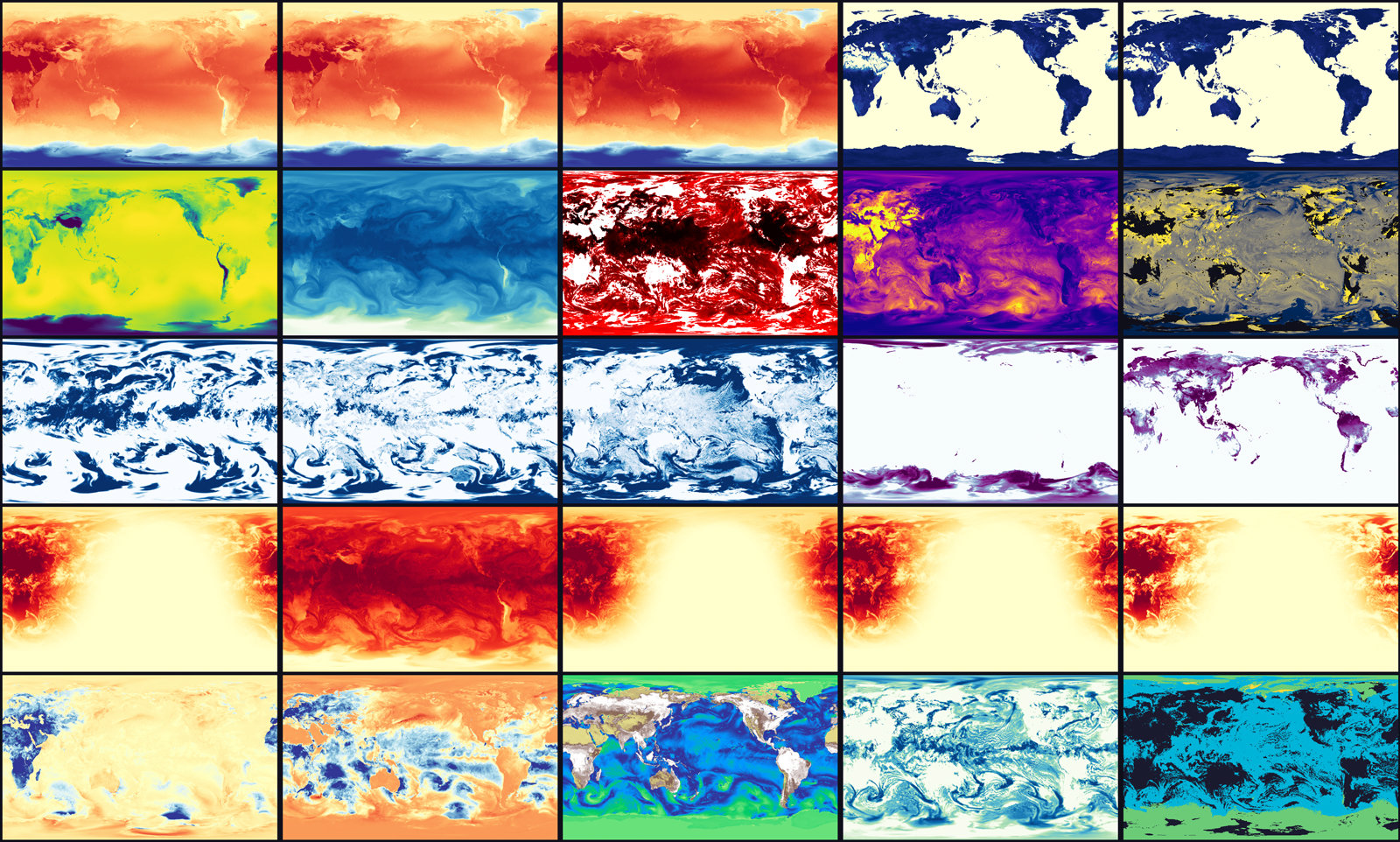
A consortium of 35 countries just lost. Their supercomputer, beaten by a startup with a handful of employees running on $100K consumer GPUs.
In weather forecasting, of all places. The field where human lives hang in the balance.
Here's what everyone assumed
There's a common belief that bigger AI models make better predictions. More parameters, more compute, more training data — the logic goes that accuracy follows scale.
ECMWF (European Centre for Medium-Range Weather Forecasts) was the embodiment of this belief. A weather prediction system built over decades by a 35-country consortium, powered by a multi-hundred-million-dollar supercomputer, backed by 40+ years of atmospheric data. Google's GraphCast and ECMWF's own AIFS both competed against it using large transformer models.
"Bigger and more" — that looked like the grammar of the AI forecasting race.
But the numbers said otherwise
WindBorne Systems was founded in 2019 by Stanford students. Their funding is $25M, valuation $85M, and instead of a multi-hundred-million-dollar supercomputer, they run on $100K consumer GPUs.
And yet their sixth model, WeatherMesh-6, posted these results against ECMWF.
WeatherMesh-6 uses around 1 billion parameters — fewer than its competitors. Yet it outperforms them.
According to WindBorne's head of AI, the key improvement in this version isn't the algorithm — it's how balloon data gets fed into the model. Not just "new data," but how quickly and directly that data reaches the model.
| ECMWF IFS | WeatherMesh-6 | |
|---|---|---|
| Forecast updates | Every 6 hours | Every hour |
| Hardware | Multi-hundred-million-dollar supercomputer | $100K consumer GPUs |
| Data collection | Agency-aggregated (introduces latency) | 400 balloons, direct ingestion |
| High-res refresh | — | 3km / 15-min cycle (CONUS & Europe) |
| Forecast error (RMSE) | Baseline | 38% lower |
WindBorne's founder put it bluntly.
"I personally don't understand the business model of being an AI weather company without a dataset advantage."
— WindBorne Systems founder
Here's where the real AI battle is fought
Pebblous's technical breakdown nails this. WeatherMesh, GraphCast, and ECMWF AIFS all use transformer-based architectures. The model structures are similar. The single difference: how fast and how directly data enters the model.
ECMWF receives data aggregated through government agencies and third parties — unavoidable delay. WindBorne's 400 balloons fly over oceans and observation-sparse regions, collecting atmospheric data and piping it directly into the model. That freshness gap in observations creates the 38% gap in forecast accuracy.
Foundation models are already strategic commodities. The model you're using today, your competitor can buy too. But a data pipeline? That's yours.
The irony here
NOAA, the US Air Force, the US Navy — the very agencies competing with WindBorne in forecasting — are buying WindBorne's balloon data. Even if they build a better AI model, they'd still need WindBorne's proprietary observations. That's a real data moat.
Data Pipeline Strategy — Your Action Checklist
These principles come straight from WindBorne's playbook. They apply to SaaS, e-commerce, and marketing just as much as weather forecasting.
- Audit your data freshness
Where does your AI actually get its data? Direct collection, or aggregated from a third party? WindBorne cut its update cycle from 6 hours to 1 hour and got 38% more accurate. Freshness compounds. - Build one data source your competitors can't buy
A proprietary feedback loop, exclusive data contracts, your own sensors or logs — anything. "You can't win an AI competition without a dataset advantage" applies way beyond weather. - Remove intermediary aggregation steps
Every third party in your data chain introduces latency and loss. Before upgrading your model, try shortening the pipeline. Going direct often beats going bigger. - Check if your data asset could have dual revenue
WindBorne sells balloon data to the government while using that same data to beat the government at forecasting. Could your data collection infrastructure become a sellable product? - Ask this before every model upgrade
"How much better would the same model perform with better data?" WeatherMesh-6 proves the answer can far exceed what a new model would deliver.
Note
WeatherMesh-6's benchmarks are currently based on WindBorne's own testing. Independent verification is ongoing — keep this in mind when citing specific figures.
Want to go deeper?
What's New in WeatherMesh-6 WindBorne's official release notes — 38% RMSE reduction, 128-member ensemble, full technical benchmarks windbornesystems.com
AI Beat the Weather Agency — It Was Data Freshness, Not the Model Deep-dive analysis of why WeatherMesh won from a data pipeline perspective blog.pebblous.ai
WindBorne Benchmarks Live performance comparison against ECMWF and NOAA HRRR — public dashboard benchmarks.windbornesystems.com
From AI table stakes to AI advantage McKinsey on building competitive moats after foundation models become commodities mckinsey.com
The New Moat: Why Proprietary Data Is Your Only Durable Competitive Advantage in AI Strategic report on proprietary data in the age of AI aiireland.ie
This AI weather startup is out-forecasting government agencies Original TechCrunch report on WeatherMesh-6 techcrunch.com