When key researchers say they want to go independent
When four important researchers say they are leaving together to start a company, the choices can look extreme: retain them with better terms, or cut ties before they become competitors. But if the new company will not compete directly right away, there are relationships worth considering in between.
After Jeff Dean and his colleagues left Google to found Discovery Loop, Alphabet remained a founding investor and Google Cloud partner of the company. A collaborative relationship to research machine learning systems and related infrastructure was also announced.
It would not be accurate to describe this case as “retaining talent through equity.” The four had already formed an independent company. The confirmed facts are that three relationships remained after their departure: investment, cloud, and joint research. You can interpret this as a structure through which Alphabet preserved future options, but it is difficult to assess which options it actually secured because the contractual rights have not been disclosed.
What the four independent founders aim to build
Discovery Loop’s first goal is to automate the experimental cycle of machine learning research.
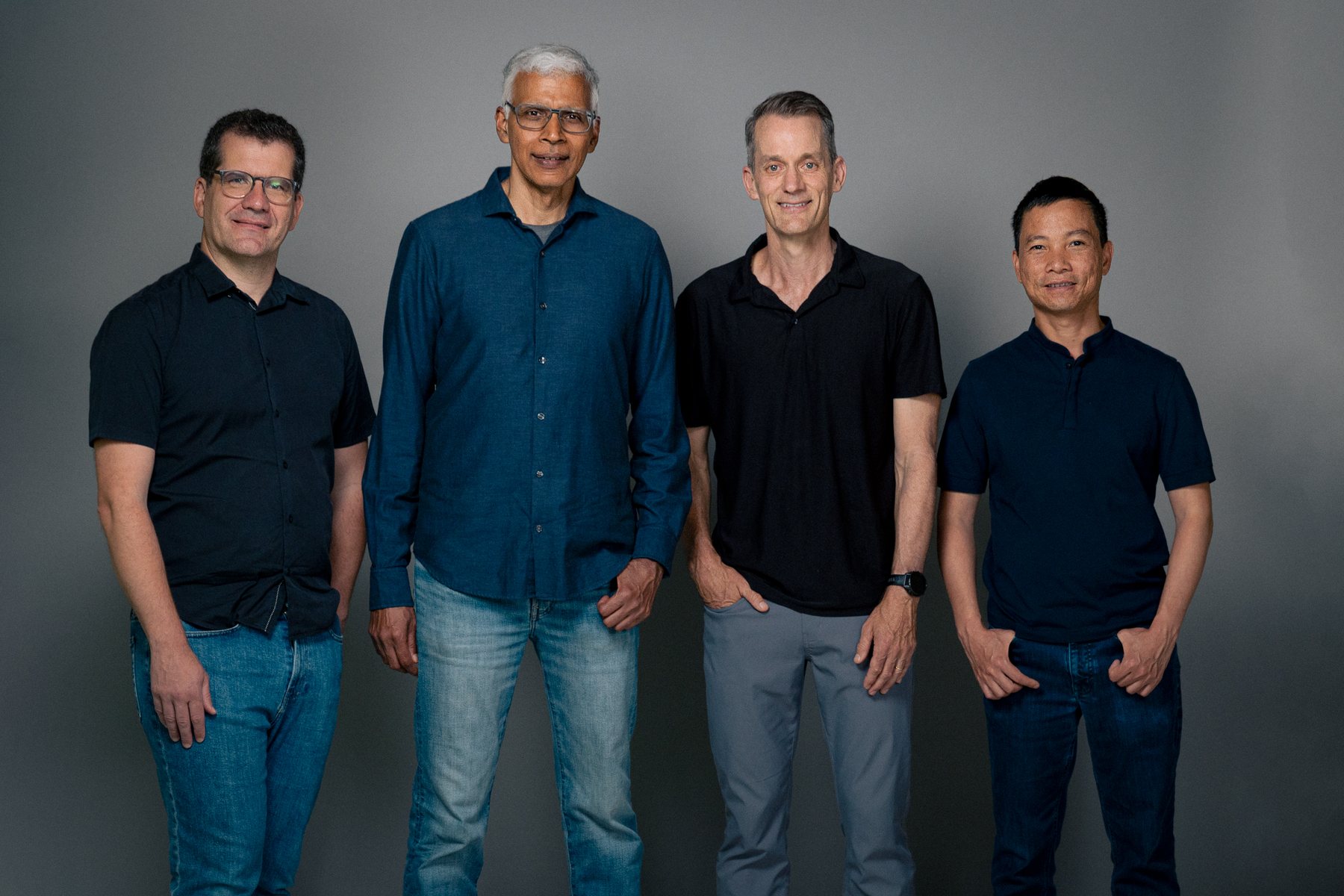
The co-founders are Jeff Dean, Sanjay Ghemawat, Quoc Le, and Oriol Vinyals. The company launched as a public benefit corporation and envisions a system in which AI repeatedly proposes and runs experiments, then evaluates the results. Its first application area is research on its own machine learning infrastructure, models, and systems.
It has also said that, over the long term, it plans to run thousands of experimental loops in parallel and expand into other scientific and engineering fields. But these are still goals presented by the company. No public customers, revenue, product performance, or actual scientific-discovery outcomes have been confirmed.
The three relationships Alphabet retained
Rather than treating the Alphabet–Discovery Loop relationship as a single investment agreement, it is better to separate it into three relationships with distinct characteristics.
| Link | Confirmed details | Terms still unknown |
|---|---|---|
| Equity investment | Alphabet participated as a founding investor | Investment amount, ownership stake, information rights, board rights |
| Cloud | Google Cloud partnership and an agreement to provide computing in the first year | Pricing, credit amount, usage limits, exclusivity, renewal terms |
| Joint research | Research collaboration on ML systems and related infrastructure | IP ownership, data access rights, authority to publish results |
The initial funding round was co-led by Radical Ventures and Khosla Ventures, with Lightspeed, Kleiner Perkins, Doerr Capital, and Alphabet participating. At the time of the announcement, the round had not yet closed, and the total amount and valuation were not disclosed.
The fact that a relationship remains and the size of an option are separate matters. Because the ownership stake and contractual rights have not been disclosed, it is not possible to conclude how much Alphabet can share in Discovery Loop’s results or influence its decision-making. The first-year computing arrangement also has unconfirmed pricing, usage limits, and exclusivity.
Do not attribute the stock decline entirely to the departure
There was reporting that Alphabet’s share price fell by more than 4% on the day of the announcement, but there is insufficient basis to view that as the result of Jeff Dean’s departure alone.
That same day also brought news of Demis Hassabis’s role change, a DeepMind operating reorganization, concerns about the Gemini schedule, and the departures of several researchers. The coverage, too, treated these as a broader AI leadership reshuffle rather than individual departures. Without data separating the effect of each event, the causal claim that “Jeff Dean left and the share price fell” cannot be verified.
This distinction matters in practice as well. Rather than inferring deal intent from market reactions or buzz, first confirm the actual contracts, rights, and risks that remain.
A one-page memo for defining post-departure relationships
If you are facing a similar decision, first prepare four sets of information: the roles and knowledge held by the people who plan to leave; the overlap between the new company and the existing business and IP; the approval owners for investment, cloud, and joint research; and internal policies on security, confidentiality, IP transfer, and conflicts of interest. Without this information, it is easy to record only the benefits of a relationship while missing the actual approval conditions.
- Write down the new company’s initial business scope.
Distinguish whether it directly conflicts with the existing company’s current business, customers, or technology. Discovery Loop’s disclosed initial area is experiment automation for ML research and engineering. - Separate the relationships into three rows.
Put equity investment, infrastructure supply, and joint research in separate rows. The three relationships differ not only in purpose, but also in the rights to review and the people accountable for approval. - Separate confirmed from unconfirmed terms.
Write only information verified in announcements or contracts under “confirmed terms.” Do not fill gaps with speculation about ownership stakes, information rights, IP ownership, or exclusivity; move them to “unconfirmed terms.” - Assign an owner and deadline to every unconfirmed term.
Assign owners that match the actual organization, such as CVC and legal for investments; infrastructure and procurement for cloud; and research leadership, security, and IP legal for joint research. - Put risks and stop conditions into sentences.
Define in advance the events that will trigger a review or end the relationship: when the businesses directly conflict, when unauthorized confidential access occurs, or when cost or usage falls outside approval criteria.
Copy the table below into your document, then fill in the bracketed sections.
| Relationship type | Purpose | Confirmed terms | Unconfirmed terms | Approval owner | Risks | Stop conditions |
|---|---|---|---|---|---|---|
| Equity investment | [Outcome sought through the investment] | [Confirmed details such as investment amount and rights] | [Ownership stake, information rights, etc. / owner / deadline] | [CVC, finance, legal owner] | [Conflicts of interest, information exposure, etc.] | [Review or termination event] |
| Infrastructure supply | [Purpose of the supply relationship] | [Confirmed details such as term, price, and limits] | [Exclusivity, renewal terms, etc. / owner / deadline] | [Infrastructure, sales, procurement owner] | [Cost, security, dependency, etc.] | [Review or termination event] |
| Joint research | [Purpose of the research collaboration] | [Confirmed details such as scope and deliverables] | [IP, data, publication rights, etc. / owner / deadline] | [Research, security, IP owner] | [Confidentiality, IP transfer, etc.] | [Review or termination event] |
Completion criteria: All purposes, terms, owners, risks, and stop conditions for the three relationships are filled in, and every unconfirmed term has a verification owner and deadline. In the decision memo, record the relationships that actually remain and the rights not yet secured separately, rather than using an interpretation such as “talent retention.”
If you want to dig deeper
Discovery Loop — Continuous Exploration You can review the experimental loop and initial application area described by the company. discoveryloop.com
Radical Reads: Jeff Dean on Launching Discovery Loop You can read about the co-founders, investor lineup, and plans at founding. radical.vc
4 of Google’s Top AI Brains Are Leaving—and Launching Their Own AI Startup You can also review reporting on Alphabet’s investment, cloud, research collaboration, and first-year computing provision. wired.com