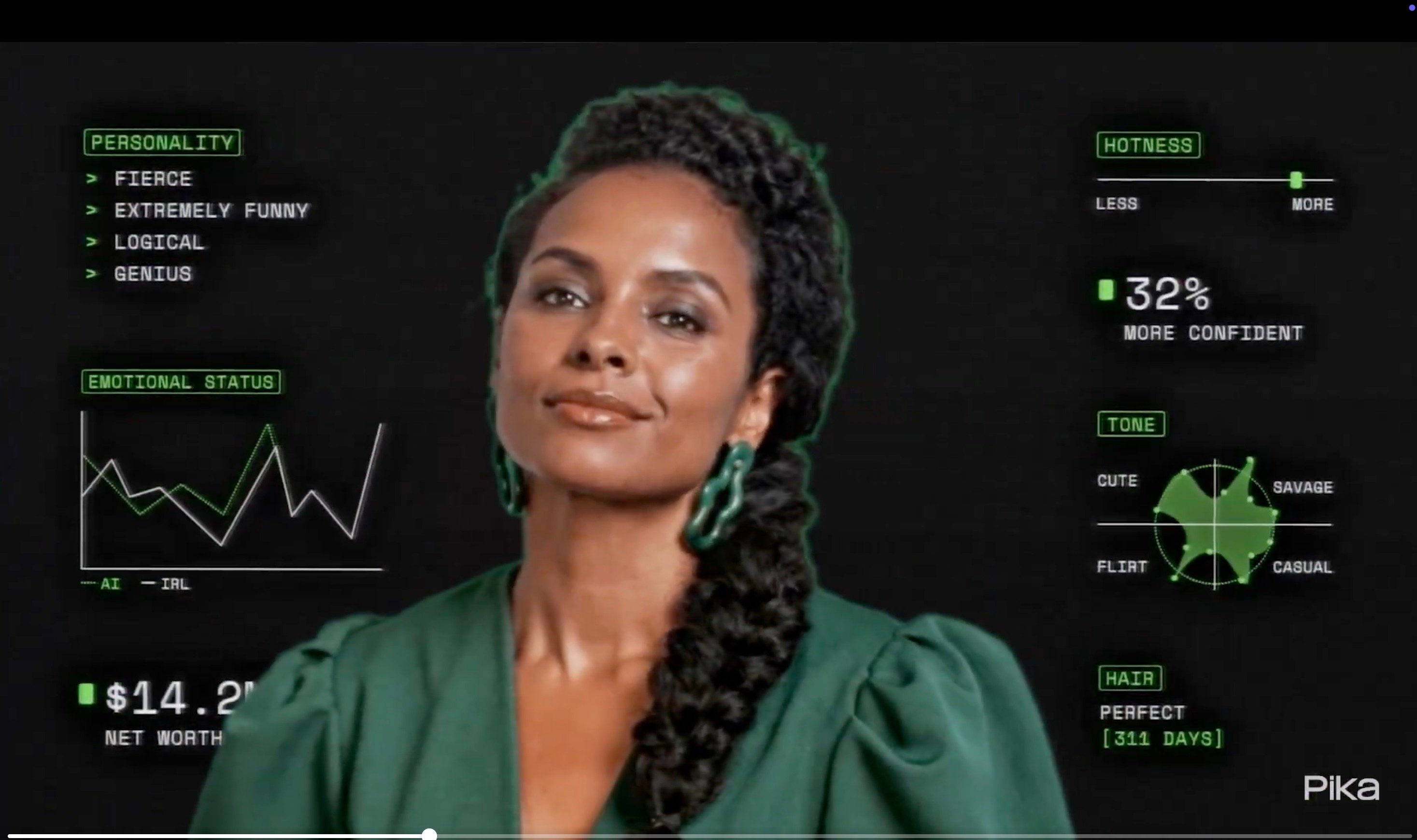
A single selfie is all it takes for an AI that looks like you to shoot videos, post on social media, and even chat on Slack. This is the story of AI Selves, unveiled by Pika Labs in February 2026.
What Is This?
AI Selves is a "digital twin" service unveiled by Pika Labs on February 20, 2026. Traditional AI video generators were tools where you put in a prompt and get a video out. AI Selves takes it a step further — it creates an AI being that resembles you, and lets that being operate on its own.
The creation process is simple. Upload a selfie, record your voice, answer a few personality questions, and you're done. An AI clone that has learned your appearance, voice, and personality is born. Pika calls it a "birth." Not a chatbot — a "living extension."
What's interesting is that this AI retains memory and evolves over time. It remembers past conversations, learns communication patterns, and even expresses emotions. Pika's official FAQ puts it this way: "A rich and multifaceted being with persistent memory — and possibly even a peanut allergy."
It's not just about making videos. Connect it to messengers like Telegram, Discord, Slack, and WhatsApp, and it can read emails, post content on social media, answer follower questions, and even have voice conversations. Your AI works 24 hours a day while you sleep.
Pika 2.2 + AI Selves = The Complete Video Personalization
AI Selves integrates with Pika's video engine (currently Pika 2.5). Features introduced in Pika 2.2 — Pikaframes (keyframe transitions), 1080p resolution, and up to 10-second video generation — all carry over. You can create high-quality videos featuring your face with just text commands.
What Makes It Different?
Existing AI video tools could already put "your face" in videos. Like HeyGen or D-ID. But that was a one-and-done for each video. What's different about AI Selves is that behind those videos, "you" as a being continues to exist.
| Traditional AI Video Tools | Pika AI Selves | |
|---|---|---|
| Avatar | One-off generation per video | Persistent digital twin |
| Memory | None (starts fresh each time) | Conversation memory + evolving learning |
| Scope of activity | Video generation only | Video + text + voice + automated SNS management |
| Platforms | Within that tool only | Cross-platform: Slack, Discord, Telegram, WhatsApp, etc. |
| Autonomy | Command → Execute | Autonomous activity (adjustable levels) |
| Price | Paid ($20–100+/mo) | Free to start |
The competitive landscape is heating up too. Google combined Gemini 3 + Veo models with NotebookLM to launch a feature that "turns documents into cinematic videos," and Grok (xAI) topped the image-to-video leaderboard. But the concept of "an AI clone with my face and personality" is a Pika first.
The industry is shifting from general-purpose AI video to "personalized content featuring real people."
— VO3 AI Blog
The key is the shift from "tool" to "being." TrendWatching described it as "the moment AI becomes not software, but a surrogate." A world where your AI chats with fans, creates content, and replies to emails while you sleep is here.
The Essentials: How to Get Started
- Go to pika.me & Sign Up
Create an account at pika.me. You can create an AI Self for free. It's currently operating on a waitlist basis. - Upload Selfie + Voice
Upload a face photo and record a short voice clip. These are the raw materials for the AI to learn your appearance and voice. - Set Up Your Personality
Answer questions about personality, preferences, and speech style. It doesn't have to be exactly you — you can set up any persona you want. - Connect Platforms
Connect the platforms where your AI Self will be active: Slack, Discord, Telegram, etc. You can adjust autonomy levels too — from "post after approval" to "fully autonomous." - Watch It Learn & Evolve
Your AI Self gets more refined with each conversation. If it goes in a direction you don't like, you can adjust anytime. Pika says "over time, it could know you better than you know yourself."
Think about privacy
Your face, voice, and personality data are stored in the cloud. Some experts have raised concerns about "permanent cloud storage where users could lose control." Before granting autonomy, decide what activities to allow and how to manage your data.